WhatsAppCHAT
CALL US& CONNECT

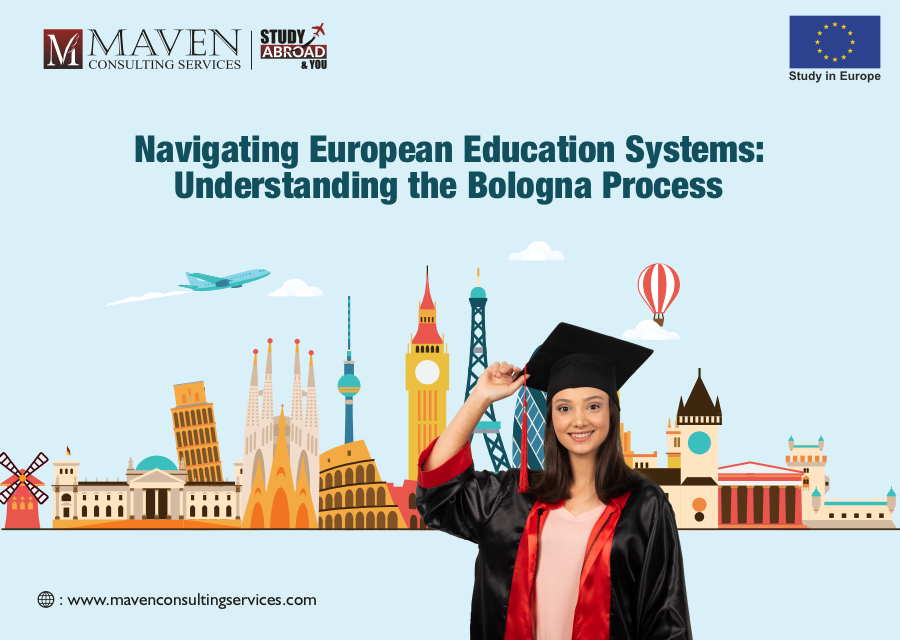
Are you an aspiring student looking to pursue higher education in Europe? The prospect of studying abroad is both exciting and intimidating, with a myriad of universities, programs, and requirements to navigate. Fortunately, there’s a fundamental framework that can make this process much more accessible and transparent – the Bologna Process. In this comprehensive guide, we will delve into what the Bologna Process is, its history, and how it directly impacts students and their educational journey across Europe.

The Bologna Process isn’t just a geographical location; it’s a groundbreaking educational reform initiated in the late 1990s. Named after the city of Bologna, Italy, where European ministers of education gathered in 1999, this initiative aimed to establish a unified European education system, known as the European Higher Education Area (EHEA), by 2010. Since then, it has evolved and expanded its scope to benefit students from all corners of the world.
The core of the Bologna Process revolves around a three-cycle system aimed at improving the compatibility and mobility of students and academics throughout Europe. This system simplifies the structure of higher education into three distinct stages:
Your gateway to higher education, the Bachelor’s degree typically spans three years and provides a solid foundation in your chosen field. It’s the equivalent of an American undergraduate degree.
Benefit: This stage allows you to explore your interests before committing to a specialized path.
The Master’s degree, lasting one to two years, is your opportunity to delve deeper into your chosen subject, similar to an American graduate degree.
Benefit: It equips you with advanced knowledge and skills, making you more competitive in the job market.
For those pursuing research or academic careers, the Doctorate is a three to five-year program focused on in-depth research, similar to the American Ph.D.
Benefit: It opens doors to careers in academia and advanced research, fostering innovation and critical thinking.
The three-cycle system within the European Education Systems streamlines academic mobility, facilitating effortless transitions between universities and countries within the European Higher Education Area (EHEA).
The European Credit Transfer and Accumulation System (ECTS) is a vital aspect of the Bologna Process. It standardizes the way study attainment and performance are measured across higher education institutions in the EHEA.
European Credit Transfer and Accumulation System (ECTS):
Benefit: ECTS simplifies studying abroad and credit transfer, ensuring your educational achievements are recognized and valued across Europe.
Earning a degree within the Bologna Process not only enhances your educational experience but also opens doors to a vibrant European job market. Here’s what you need to know:
Ensuring the quality of higher education is a top priority within the Bologna Process. National quality assurance agencies, in collaboration with international agencies, set and uphold rigorous standards for universities and programs.
The European Higher Education Quality Assurance Register (EQAR) plays a pivotal role in ensuring the credibility of institutions within the diverse European Education Systems. By maintaining a list of trusted quality assurance agencies. When selecting a university or program, students can refer to this register to ensure their institution is accredited, guaranteeing the recognition of their degree. You can be confident that you’re receiving a high-quality education, regardless of where you choose to study within the EHEA.

One of the primary objectives of the Bologna Process is to encourage student mobility. With the compatibility of degrees, the ECTS system, and the growing number of universities offering courses in English, students can easily spend a semester or a year abroad, gaining international experience and broadening their horizons.
The Erasmus+ program is a well-known example of this mobility effort, providing financial support for European students to study or complete internships in other European countries. You can immerse yourself in different cultures, gain a global perspective, and enhance your personal and professional growth.
While the Bologna Process has brought about significant positive changes, it’s not without its challenges and criticisms. Some of these include concerns about the potential loss of diversity and local identity due to standardization. Additionally, the cost of higher education in some European countries, especially at the Master’s and Doctorate levels, can be a significant barrier.
Advice: Keep these challenges in mind and explore scholarship and funding options to make education truly accessible to all.
The Bologna Process remains dynamic, adapting to the evolving landscape of European higher education. It has expanded its reach beyond Europe to include non-European countries, reflecting its global significance. The process continues to address current challenges such as digitalization, online education, and the growing importance of skills beyond academic knowledge. By staying informed about these changes, you can make the most of your educational journey and be well-prepared for the future.
In conclusion, the Bologna Process is a game-changer for students aspiring to study in Europe. It streamlines higher education, makes mobility and credit transfer a breeze, and ensures quality assurance. While there are challenges to overcome, understanding and embracing the Bologna Process will empower you to make informed decisions about your education and seize the abundant opportunities that European universities have to offer. Your European educational adventure awaits – make the most of it!