WhatsAppCHAT
CALL US& CONNECT

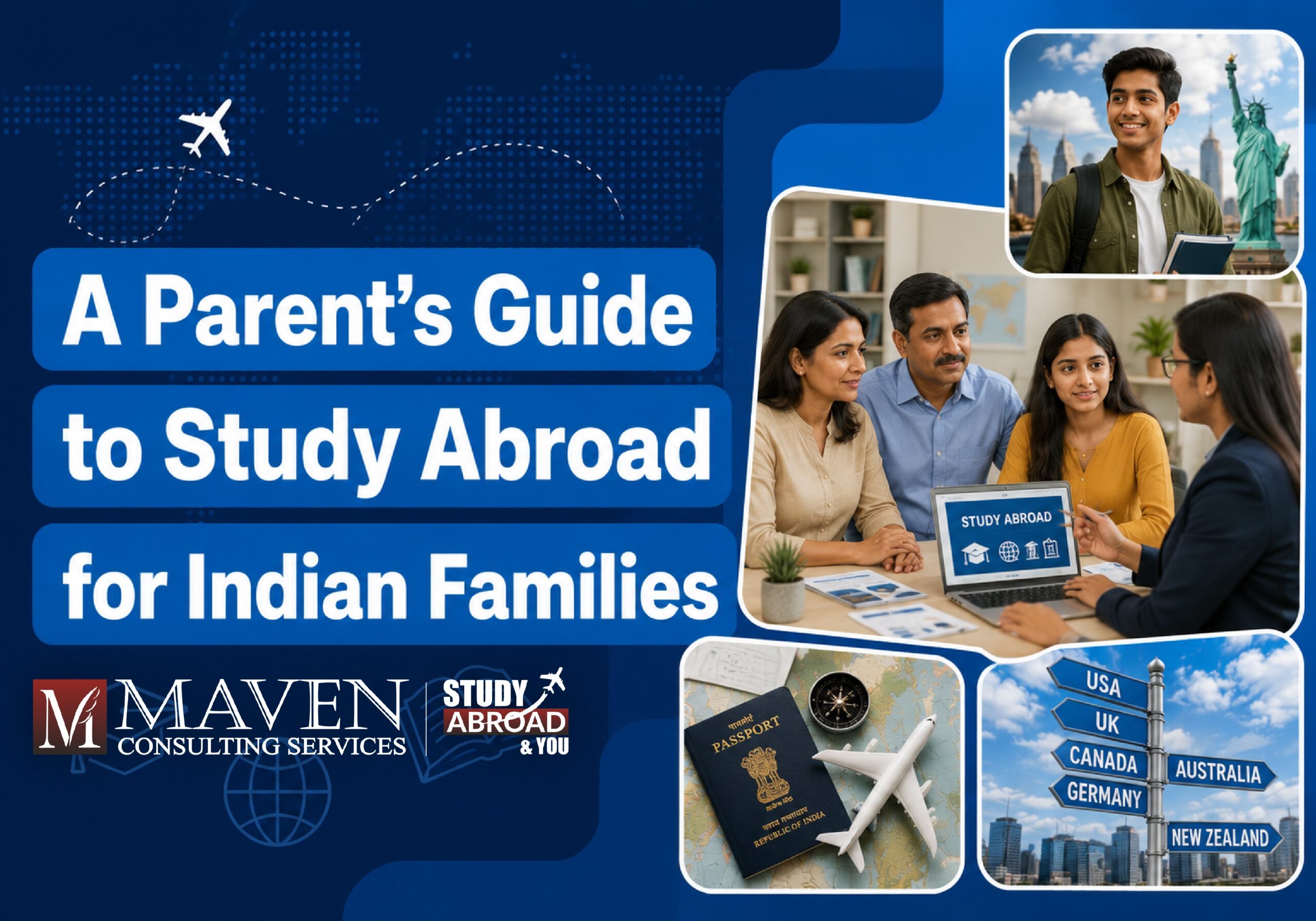
You are not just funding a degree. You are sending someone you love across the world, often for the first time. That deserves clear, practical information — and a little reassurance. This parent’s guide to study abroad is written for parents, to help you make confident decisions and support your child well, before and after they fly.
It pairs naturally with our destination guides — start with our Study Abroad hub — and with two posts parents find especially useful: Is the USA safe for Indian students? and how much students can realistically earn while studying.
The most important step in any parent’s guide to study abroad is asking the right question. Most families begin with “which country is cheapest?” The better question is “which country, course and city fit my child’s goals and our budget?” A slightly costlier course with strong job outcomes can be far better value than a cheap one that leads nowhere. Begin with your child’s field and career goal, then work outward to country, university and cost.
The sticker price is never the whole story. Budget for all of it, across the full length of the degree:
This is where parents following this parent’s guide to study abroad have the most questions. Sending money abroad from India is done under the RBI’s Liberalised Remittance Scheme (LRS), which allows each resident (including minors) to remit up to USD 250,000 per financial year. Banks and authorised forex dealers handle the transfer.
On tax, the picture improved markedly in 2026. As of Budget 2026 (from 1 April 2026):
| Education remittance | TCS rate |
|---|---|
| Up to Rs 10 lakh per year (any source) | Nil |
| Above Rs 10 lakh — funded by savings | 2% (reduced from 5%) |
| Above Rs 10 lakh — funded by an education loan | 0% |
| Non-education remittances above Rs 10 lakh | 20% |
Most families use a blend. Each route has merits:
There is no single right answer — it depends on your finances and comfort with risk. We break down lenders, interest, collateral and repayment in our dedicated Education Loan Guide (2026).
No parent’s guide to study abroad is complete without addressing safety. Physical safety matters, but the data is reassuring: most student tragedies abroad relate to medical issues, accidents and mental health rather than violent crime. Choose the city and neighbourhood with care, insist on strong health insurance, and read our full safety guide for the specifics.
The risk parents underestimate most is mental wellbeing. The first few months abroad can be lonely — new culture, new food, academic pressure, no family nearby. Every university offers free, confidential counselling; make sure your child knows how to reach it before they need it.
Agree a rhythm before they leave: perhaps one longer call a week, plus quick daily messages. Resist the urge to track every meal and every grade. The independence you are worried about is exactly the growth they went abroad for. Be the steady base they can always return to — not a checkpoint they have to report to.
“In fourteen years, the families who do best are not the wealthiest — they are the ones who planned honestly and stayed calm. They budgeted the full degree, not the brochure figure. They chose the course for their child’s future, not for status. And they picked advisors who told them the truth, including the inconvenient parts. If a consultant only ever has good news and pushes one or two universities hard, ask who is paying them. That single question protects your family more than any glossy ranking.”
As this parent’s guide to study abroad emphasizes, this is where families lose the most money and make the worst-fit decisions. Be cautious if a consultant:
Following this parent’s guide to study abroad, you should know that Maven is deliberately commission-free for exactly this reason — our advice is shaped by your child’s profile, not by which university pays us.
| When | What to do |
|---|---|
| 12-18 months before | Shortlist country, course and budget; start tests (IELTS/TOEFL etc.) |
| 10-12 months before | Finalise universities; prepare documents and SOP |
| 6-10 months before | Apply; arrange finances and loan if needed |
| 3-6 months before | Accept offer; apply for visa; book health cover |
| 1-3 months before | Flights, accommodation, forex, departure checklist |
Here are the most common questions from families using this parent’s guide to study abroad for Indian families.
It varies by country and course. Plan for tuition plus living plus a buffer — a year abroad commonly totals INR 25 to 60 lakh once everything is added. Always budget the full degree, not just year one.
Through the RBI’s LRS, which allows up to USD 250,000 per person per financial year. Banks and authorised forex dealers handle the transfer and collect any TCS, which you can claim back when filing your return.
From 1 April 2026: nil up to Rs 10 lakh a year; 2% above that if self-funded (down from 5%); and 0% if funded by a qualifying education loan, even above Rs 10 lakh. TCS is refundable against income tax.
Broadly yes, but it depends on city, neighbourhood and precautions. Most student tragedies abroad relate to medical, accident or mental-health causes rather than crime. Choose location carefully and take insurance seriously.
Both work, and many blend them. As our parent’s guide to study abroad explains, a loan preserves savings, builds discipline and keeps education remittances at 0% TCS; savings avoid interest. Our education loan guide covers the detail.
Ask how they are paid. Commission-driven agents push specific universities. Prefer commission-free, transparent advisors who recommend based on your child’s profile and never guarantee visas.
Agree a rhythm before they leave — a weekly call plus quick daily messages. Resist tracking every detail; your steady, calm presence matters more than constant contact.
This parent’s guide to study abroad is just the beginning.
Maven is commission-free, with 14+ years of experience, 700+ university partners and a 99.8% visa success rate. We will help your family plan the budget, funding and safety — clearly, and in your interest.
Book a Free Consultation
Sunday, October 26, 2025 | The Taj MG Road, Bangalore | 10 AM – 4 PM