CALL US& CONNECT









Scholarships for Indian Students 2026 are no longer just a bonus, they are often the difference between “planning” and “actually going.” With rising costs and more competitive admissions, funding has become a central part of every serious study abroad plan.
The reality is simple. Thousands of scholarships exist, but most students either don’t apply, apply too late, or miss out due to lack of clarity on what actually works in 2026. This is where the right strategy matters more than just eligibility.
Who this blog is for:
- Indian students planning to study abroad in 2026 (UG or PG)
- Parents looking to reduce the financial burden of overseas education
- Students aiming for countries like USA, UK, Canada, Germany, Australia and Europe
- Applicants who have good profiles but are unsure how to convert them into funded admits
What you will take away from this blog:
- A clear understanding of the best Scholarships for Indian Students 2026 (country-wise and course-wise)
- Real insights into how scholarships are actually awarded today (not outdated myths)
- Practical strategies to improve your chances of getting funded
- A structured approach to planning applications, timelines and documentation
This is not just a list of scholarships. It is a practical guide to help you approach funding the right way in 2026.
Types of Scholarships Available for Indian Students in 2026
Study abroad scholarships for Indian students are offered through universities, governments, and independent organisations, each with different eligibility and funding structures.
Understanding how scholarships are classified is critical because many Indian students miss funding opportunities simply by searching under the wrong category. The table below provides a quick, high-level overview of the main types of scholarships available for Indian students planning to study abroad in 2026.
| Type | Basis | Where they are Common | Funding type | Examples |
|---|---|---|---|---|
| Merit-Based | Academic & profile strength | USA, UK, Canada, Europe | Partial | University merit awards, Dean’s Scholarships |
| Need-Based | Family income & finances | USA, private universities | Partial / Full | Harvard Need-Based Aid, Stanford Financial Aid |
| Government-Funded | Merit, leadership, impact | UK, USA, Germany | Mostly full | Chevening, Fulbright-Nehru, DAAD |
| University-Specific | University criteria | All destinations | Mostly partial | UBC Entrance Awards, Monash Scholarships |
| Program / Field-Based | Skill shortage fields | Europe, UK, Canada | Partial / High | Erasmus Mundus, STEM Excellence Grants |
If you want detailed explanations, eligibility nuances, and application strategies for each scholarship type, continue reading the sections below.
If you already understand these categories, you may skip ahead to the next section: Country-Wise Scholarships for Indian Students (2026 Intake).
1. Merit-Based Scholarships
These scholarships are awarded based on academic excellence and profile strength. They typically consider:
- Academic scores (10th, 12th, UG)
- GMAT/GRE scores (where applicable)
- English proficiency
- Academic consistency and ranking
Merit-based scholarships are most common at universities in the USA, UK, Canada, Australia, and Europe and are often offered as tuition waivers or fee reductions.
2. Need-Based Scholarships
Need-based scholarships assess the financial background of the student and family. Documentation usually includes:
- Income certificates
- Bank statements
- Affidavits of support
- Tax returns
These are common in the USA and select private universities globally, but they are highly competitive and require transparent financial disclosure.
3. Government-Funded Scholarships
These are among the most prestigious and competitive scholarships available to Indian students. They are funded either by:
- The Indian government (limited international scope), or
- Host country governments (more common)
Fully funded scholarships for Indian students are most commonly awarded through government-backed programs, where selection depends on academic merit, leadership potential, and long-term impact.
Government scholarships often cover tuition, living expenses, insurance, and travel, but selection is based on academic merit, leadership potential, and long-term impact.
4. University-Specific Scholarships
Almost every reputable university offers its own scholarships. These can be:
- Automatic (offered with admission)
- Application-based (separate essays or forms required)
University scholarships are often partial, but when combined with assistantships or part-time work, they significantly reduce overall cost.
5. Program-Specific and Field-Based Scholarships
Certain courses attract more funding due to skill shortages and industry demand. These include:
- STEM programs
- Data Science, AI, Cybersecurity
- Public Policy, Sustainability
- Healthcare and Life Sciences
These scholarships are increasingly industry-linked, especially in Europe and emerging destinations.
Country-Wise Breakdown of the Best Scholarships for Indian Students 2026
“Which country offers the best scholarships for Indian students in 2026?”
Well…

1. Scholarships in the USA for Indian Students
The USA offers the widest variety of funding options, but also the highest competition.
Major options include:
- Fulbright-Nehru Fellowships
- University merit scholarships
- Teaching Assistantships (TA)
- Research Assistantships (RA)
- Departmental funding for research-heavy programs
Most master’s students receive partial funding, while PhD students are more likely to receive fully funded offers. Early application and strong SOPs play a decisive role.
2. Scholarships in the UK for Indian Students
The UK is popular due to one-year master’s programs, but funding is limited and highly selective.
Key scholarships include:
- Chevening Scholarships
- GREAT Scholarships
- Commonwealth Scholarships
- University and departmental awards
UK scholarships heavily value leadership, clarity of goals, and impact, especially for government-funded options.
3. Scholarships in Canada for Indian Students
Canada offers fewer full scholarships but strong partial funding opportunities, especially at the graduate level.
Common options include:
- Vanier Scholarships (PhD)
- Ontario Graduate Scholarships
- University entrance scholarships
- Faculty-based awards
Canada’s funding ecosystem is closely linked to research output and long-term immigration pathways, making it attractive for students planning PR.
4. Scholarships in Germany for Indian Students
Germany is unique because public universities charge little to no tuition. However, this does not automatically mean students are “funded”.
Key options:
- DAAD Scholarships
- University and state-level scholarships
- Research grants for doctoral students
Students must still plan for living costs, blocked account requirements, and insurance, unless covered by a scholarship.
5. Scholarships in Australia and New Zealand
These countries have high tuition fees but also structured scholarship programs.
Examples include:
- Destination Australia Scholarships
- Australia Awards
- University-specific bursaries
Funding is often partial, but competition is lower compared to the USA and UK.
6. Scholarships in Emerging Destinations (2026 Trend)
Countries gaining popularity among Indian students include:
- Ireland
- France
- Netherlands
- Sweden
- Singapore
These destinations offer industry-linked, skill-shortage-driven scholarships, especially for technology, business analytics, and sustainability programs.
Course-Wise Scholarships for Indian Students – Undergraduate, Master’s & PhD
– Scholarships for Undergraduate Students
Undergraduate scholarships are limited but not impossible. They often consider:
- Academic excellence
- Olympiads or national achievements
- Sports or extracurricular distinction
Early planning (Class 9–11) significantly improves chances.
– Scholarships for Master’s Students (MS, MBA, MiM)
This is the largest scholarship category for Indian students.
Funding depends on:
- Academic performance
- Standardised test scores
- Work experience (especially for MBA and MiM)
- Clarity of career goals
Professional experience often strengthens scholarship outcomes for business and tech programs.
– Scholarships for PhD and Research Programs
PhD programs offer the highest probability of full funding. Most include:
- Full tuition waiver
- Monthly stipend
- Health insurance
Admission is highly research-driven and supervisor-dependent.
Fully Funded vs Partially Funded Scholarships – Reality Check
One of the biggest misconceptions around the best scholarships for Indian students 2026 is the idea of what “fully funded” actually means.
A fully funded scholarship typically covers:
- Tuition fees
- Monthly living stipend
- Health insurance
- Sometimes travel expenses
A partially funded scholarship may cover:
- Tuition waiver only
- Fixed fee reduction
- One-time grant
In 2026, fully funded scholarships will remain rare for taught master’s programs, as most universities prioritise partial funding and merit-based fee reductions over complete sponsorship.
Students who rely solely on “100% funded” options often limit their chances unnecessarily. A smarter approach is to combine partial scholarships, assistantships, affordable destinations, and part-time work, which together can significantly reduce the overall cost of studying abroad.
Scholarship Eligibility Criteria
While eligibility varies, most scholarships evaluate:
- Academic consistency
- Quality of SOP and essays
- Letters of Recommendation
- Leadership or initiative
- Community involvement or impact
- Relevant Work experience
High scores alone do not guarantee funding.
Scholarship Eligibility Criteria Explained Simply
While scholarship rules vary across countries and universities, selection committees are essentially trying to answer one core question:
Does this student have a clear, believable plan, and will the scholarship genuinely help them achieve it?
Academic scores matter, but they are only one part of the picture.
– Academic Consistency Matters More Than Perfection
Grades are the first filter, but committees look for ‘consistency and relevance’, not flawless marks. They want to see:
- Alignment between past studies and the chosen course
- Stable or improving academic performance
- Honest explanations for gaps, changes, or average early results
If there are weak areas, they should be addressed clearly in the SOP, not ignored or hidden.
– Quality of your SOP and Essays Carry Disproportionate Weight
The Statement of Purpose and scholarship essays often matter more than students expect. This is where committees understand:
- Why this course
- Why this country
- Why now
Strong applications connect background, goals, and funding need into one clear story. Weaker ones list ambitions or financial difficulty without explaining how the scholarship enables real outcomes.
– Letters of Recommendation Should Reinforce Your Story
LORs act as third-party validation of what you claim in your essays. The strongest recommendations:
- Echo key themes from your SOP
- Highlight academic ability, initiative, leadership, or work ethic
Generic or disconnected LORs quietly weaken an otherwise strong application.
– Leadership Is Shown Through Initiative, Not Titles
Scholarship committees value initiative, responsibility, and problem-solving—not just formal roles. This can come from:
- Academic projects
- Workplace ownership
- Volunteering or community work
What matters is how these experiences shaped you, not just listing them.
– Impact and Community Involvement Matter for Top Scholarships
Prestigious and government-funded scholarships expect a clear impact outlook. Successful Indian applicants show how their education will create value beyond personal career growth, through industry contribution, innovation, policy, or social development.
This impact should feel natural in the SOP, not added as a final paragraph.
– Work Experience Strengthens Professional Programs
For MBA, MiM, and specialised master’s degrees, relevant work experience is a strong advantage. Committees prefer applicants who clearly show:
- How experience shaped academic interest
- Why further education is the logical next step
The Bottom Line
Scholarships rarely go to the highest scorers alone. They go to students who align their ‘academics, SOP narrative, recommendations, experience, and career vision’ into one convincing case.
When these elements support each other, scholarship decisions become far more favourable.
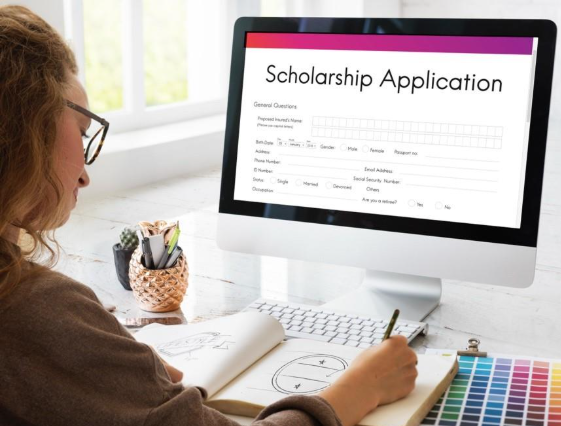
How to Apply for Scholarships – St-by-Step (2026)
Application Timeline
- Start planning: 12–18 months before intake
- Shortlist scholarships alongside universities
- Track deadlines separately from course deadlines
Documents Required
- Statement of Purpose
- Scholarship essays
- Academic transcripts
- Financial documents
- Letters of Recommendation
Common Mistakes to Avoid
- Applying late
- Using generic SOPs
- Assuming ineligibility without verification
- Ignoring smaller scholarships
How Indian Students Can Maximise Scholarship Chances
This is where strategy matters more than luck.
Successful applicants usually:
- Align country, course, and career goals clearly
- Position financial need professionally
- Apply selectively, not randomly
- Start early and revise essays multiple times
Scholarships reward clarity, consistency, and intent.
FAQs
1. Can average students get scholarships?
Yes. Many scholarships focus on profile fit, not just marks.
2. Can scholarships be combined?
In some cases, yes — depending on university policy.
3. Do scholarships guarantee visas?
No. They strengthen applications but do not guarantee visas.
4. Are scholarships available without IELTS or GRE?
Some are, depending on the university and country.
5. Can working professionals apply for scholarships?
Yes. Many scholarships favour experienced applicants.
6. Are scholarships refundable?
No. They are adjusted against fees, not refunded.
So…
Scholarships Are Possible with the Right Strategy
The best scholarships for Indian students 2026 are not myths, shortcuts, or lottery tickets. They represent structured opportunities awarded to students who plan early, position themselves well, and apply intelligently.
Funding for the 2026 intake will be competitive, but it is a far cry from impossible. What it takes is strategy, timing, and expert guidance, not guesswork.
A short conversation with an experienced advisor can often bring clarity faster than weeks of online research.
Talk to a Maven expert to quietly review your profile and help you shortlist scholarships and courses that genuinely make sense for you.
About Maven Consulting Services
Maven Consulting Services is a study abroad consultancy focused on helping Indian students make informed, realistic, and future-ready education decisions.
We work closely with students who want more than just university admits. Our approach is built on:
- Honest profile evaluation
- Country and course shortlisting aligned with career outcomes
- Scholarship and funding strategy planning
- End-to-end guidance from application to visa and beyond
Whether a student is exploring options early or preparing for a specific intake, our goal is to simplify complex decisions and help them move forward with confidence.
At Maven, we believe studying abroad should be well-planned, financially sensible, and aligned with long-term growth.