WhatsAppCHAT
CALL US& CONNECT


If you’ve been searching for the best countries for PR after study abroad in 2026, you’ve probably noticed one thing, every source says something different.
Some say Canada is still the easiest.
Some say Australia is the safest.
Others push Europe as the new PR hub.
Here’s the reality no one explains properly.PR is no longer about where you study.
It’s about:
Students are already reacting to this shift.
So instead of another “top PR countries” list, this blog is a reality check.
Let’s break the biggest myths one by one.
This is probably the most common myth we hear.
For years, Canada was positioned as the default answer.
Study → work → PR felt almost linear.
But in 2026, that story is much more conditional.
Here’s what has changed:
That means your profile matters more than ever.
Canada still works, but only if the student is strategic from day one.
| Factor | Reality in 2026 |
|---|---|
| PGWP | Not guaranteed for all programs |
| Work during study | 24 hrs/week limit |
| PR pathway | Category-based, competitive |
| Best fit | Planned, career-aligned profiles |
Canada is not “dead.”
It’s just no longer automatic.
This is another big confusion.
Students hear “65 points” and assume that means PR is achievable. In reality, that is just the minimum threshold to enter the system.
Actual PR depends on:
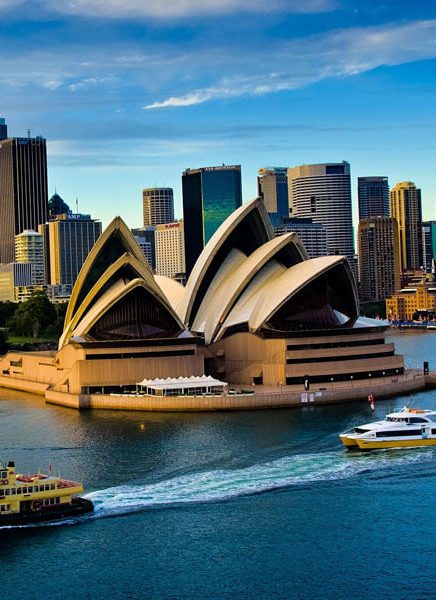
Australia’s study pathway still matters, but it is only the first step.
The key point:
The 485 visa is not PR. It is a bridge.
| Factor | Reality in 2026 |
|---|---|
| Graduate visa | Temporary bridge |
| PR system | Points + invitation based |
| Work rights | 48 hrs/fortnight |
| Best fit | Students with clear occupation alignment |
Australia is still viable.
But it is now a strategy-driven destination, not a shortcut.
This is one of the most dangerous misunderstandings.
Almost every country offers some form of post-study work visa. But students confuse that with permanent residence.
They are not the same thing.
Let’s break it down:
A country is good for PR only if:
If any one of these breaks, the PR story breaks.
| Stage | What it really means |
|---|---|
| Graduate visa | Time to find a job |
| Skilled job | Real conversion point |
| PR route | Long-term outcome |
The job is the real turning point. Not the visa.
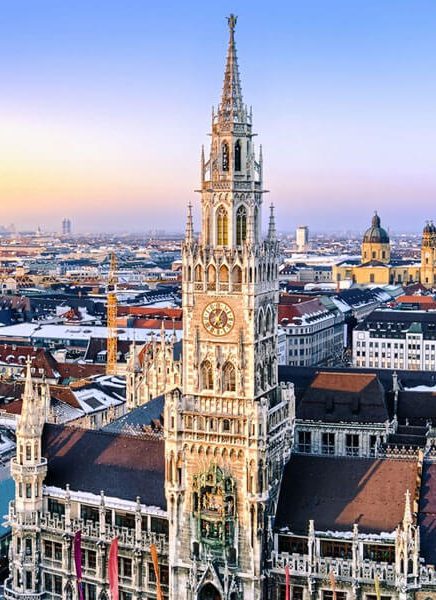
Germany is one of the strongest realistic PR pathways today. But it is often misunderstood.
Students see:
And assume it must be easy.
It’s not.
Germany has one of the most structured pathways:
This is one of the clearest systems globally.
| Factor | Reality in 2026 |
|---|---|
| Stay-back | 18 months |
| PR route | After ~2 years of skilled work |
| Language factor | Important |
| Best fit | STEM + employable profiles |
Germany is not “easy PR.”
It is “transparent PR if you are employable.”
Ireland has quietly become one of the strongest English-speaking options. But it is also one of the most misunderstood.
Ireland’s graduate system is well-designed:
The real opportunity lies in the Critical Skills Employment Permit (CSEP).
| Factor | Reality in 2026 |
|---|---|
| Stay-back | 12–24 months |
| PR route | Job-offer driven |
| Work rights | 20 hrs/week |
| Best fit | Critical-skills-aligned degrees |
Ireland is not “easy PR.”
It is “high potential if your course leads to a real job.”
At this point, most students ask:
“Then what should we actually look for?”
Here’s the honest checklist.
A country is strong for PR after study if it offers:
| Category | Countries |
|---|---|
| Strongest realistic pathways | Germany, Ireland |
| Good but profile-dependent | Australia, New Zealand, Canada |
| Good career launchpads | Netherlands |
| Not PR-first destinations | UK, USA |
This is the part most blogs skip.
Students today are not just asking about admission. They are worried about:
These are valid concerns.
And honestly, they are the right questions to ask.
A country does not give PR.
A system gives PR, and you have to fit into it.
And that system is now based on:
Not just a degree.
1. Is PR guaranteed after study abroad in 2026?
No. PR depends on job, skills, and eligibility—not just a degree.
2. Is PGWP guaranteed in Canada now?
No. It depends on program eligibility and field of study.
3. Which country gives fastest PR after study?
Germany and Ireland have the most structured pathways currently.
4. Can part-time jobs help in getting PR?
No. Only skilled jobs count toward PR pathways.
5. Is Australia PR easy after study?
No. It depends on points, occupation, and invitation.
6. Is UK a good PR destination after study?
No. The Graduate Route does not lead to settlement.
7. Does Germany require language for PR?
In many cases, yes—especially for long-term integration.
8. Is Ireland only for tech students?
No, but it works best for high-demand fields.
9. Which country is best for PR after master’s abroad?
Depends on the profile, but Germany and Ireland are strong options.
10. What is the biggest mistake students make?
Choosing a course without checking the PR pathway alignment.
Instead of asking “Which country gives PR?”, ask this:
If you’re planning for 2026-27, this is the most important shift to understand:
The best country for PR is not the most popular one.
It’s the one where your course, career, and immigration pathway actually line up.
That’s where the real outcomes are.
If you are ready to start your journey:

Sunday, October 26, 2025 | The Taj MG Road, Bangalore | 10 AM – 4 PM