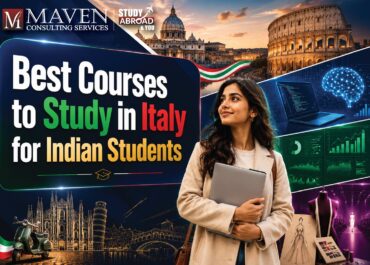
Is studying in Italy worth it for Indian students?
Yes, particularly in engineering, design, architecture, fashion, medicine, and business. Public university tuition is EUR 850 - 4,000 per year, the ISEE income system can reduce fees further, and 17 universities rank in the QS global top 500. For students evaluating cost efficiency and discipline-specific quality, Italy is among the strongest value propositions in Western Europe.
What is the minimum total annual cost for a student in Italy?
At a public university in a mid-size city such as Bologna or Padua, total annual costs (tuition plus living) typically range from EUR 8,000 to EUR 12,000 (approx. Rs 7.2L to Rs 10.9L). Students who qualify for ISEE fee reductions can reduce this further. This is among the lowest in Western Europe for an internationally recognised degree.
Do I need to know Italian to study in Italy?
Not for most English-taught master's programmes - over 500 are available. However, basic Italian is practically important for daily life, part-time work, and long-term employment. For Permanent Residency, A2 Italian is required. Medicine students must be Italian-proficient as clinical training is conducted in Italian.
Do I need GRE or GMAT?
No, for the vast majority of programmes. Admissions are based on undergraduate performance, a motivation letter, and English test scores. MBA programmes at Bocconi and LUISS may consider GMAT as one input. Medicine requires the IMAT exam - a science-based test specific to Italian medical admissions for international applicants.
What is the Universitaly portal and why is it important?
Universitaly is the Italian government's official pre-enrolment portal for international students. Completing the Universitaly process is mandatory for most non-EU applicants before applying directly to Italian universities. The portal opens November - January for the October intake. Submitting early secures the widest programme access and is required for the visa application.
How does the Italian student visa process work?
Indian students need a Long-Stay National Visa (Type D, EUR 116 fee) applied for at the Italian Consulate or VFS Global after receiving an admission letter and completing Universitaly pre-enrolment. On arrival, two steps are mandatory within the first week: register with the local Comune within 8 days, and apply for the Permesso di Soggiorno (Residence Permit) at the post office within 8 working days. Both steps must not be delayed.
What is the ISEE system and how does it reduce fees?
ISEE is Italy's means-tested income and asset assessment. Public universities use it to calculate each student's tuition. Non-EU students submit an equivalent income declaration. Many Indian families qualify for reduced fees or full waivers based on their income profile. Correct preparation of the declaration is important and is something Maven counsellors specifically assist with.
What scholarships are available for Indian students?
The MAECI Italian Government Scholarship (full tuition + stipend + accommodation) is available to Indian nationals applying through the Italian Embassy in New Delhi. The University of Bologna, University of Pavia, Bocconi University, and Scuola Normale Superiore all offer merit scholarships open to Indian applicants. India-origin awards including the Inlaks Foundation and JN Tata Endowment are also applicable.
How many hours can I work as a student?
International students may work 20 hours per week during term and full-time during official university vacations. A work permit (TWV) is required for off-campus employment, applied for by the employer. Average wages are EUR 7 - 10 per hour. Internship placements at Italian firms typically pay EUR 500 - 1,000 per month and are common in engineering, design, and business programmes.
What is the Attesa Occupazione post-study permit?
The Attesa Occupazione is a 6 - 12 month job search permit available to master's and PhD graduates. It allows graduates to remain in Italy and seek employment with open work rights. Once a job is secured, graduates transition to a standard work permit. Student years count at 50% toward Italy's 5-year Permanent Residency requirement - a 2-year master's counts as 1 year toward PR eligibility.
Is Italy safe for Indian students?
Italy is broadly safe. Milan (#44), Rome (#46), and Turin (#66) all appear in the QS Best Student Cities Rankings 2026. The Indian community is established, particularly in Milan, Bologna, and Rome. Students should register with the Comune on arrival, carry their Permesso di Soggiorno at all times, and contact the Indian Embassy in Rome or Consulate in Milan for welfare support if needed.
What are the best cities for Indian students in Italy?
Milan is strongest for design, fashion, finance, and technology - it has Italy's highest average graduate salary (EUR 1,784/month). Bologna is excellent for engineering and sciences at lower cost. Padua and Trento offer quality engineering and science programmes. Rome is well-suited for law, international relations, and public policy, with access to EU institutions.
When should Indian students start planning?
12 to 18 months before the October intake. The Universitaly pre-enrolment portal opens November - January. MAECI scholarship applications open October - December. ISEE income declaration preparation should begin well before the application window. Students targeting Politecnico di Milano, Bocconi, or University of Bologna should allow additional time for competitive applications.