WhatsAppCHAT
CALL US& CONNECT

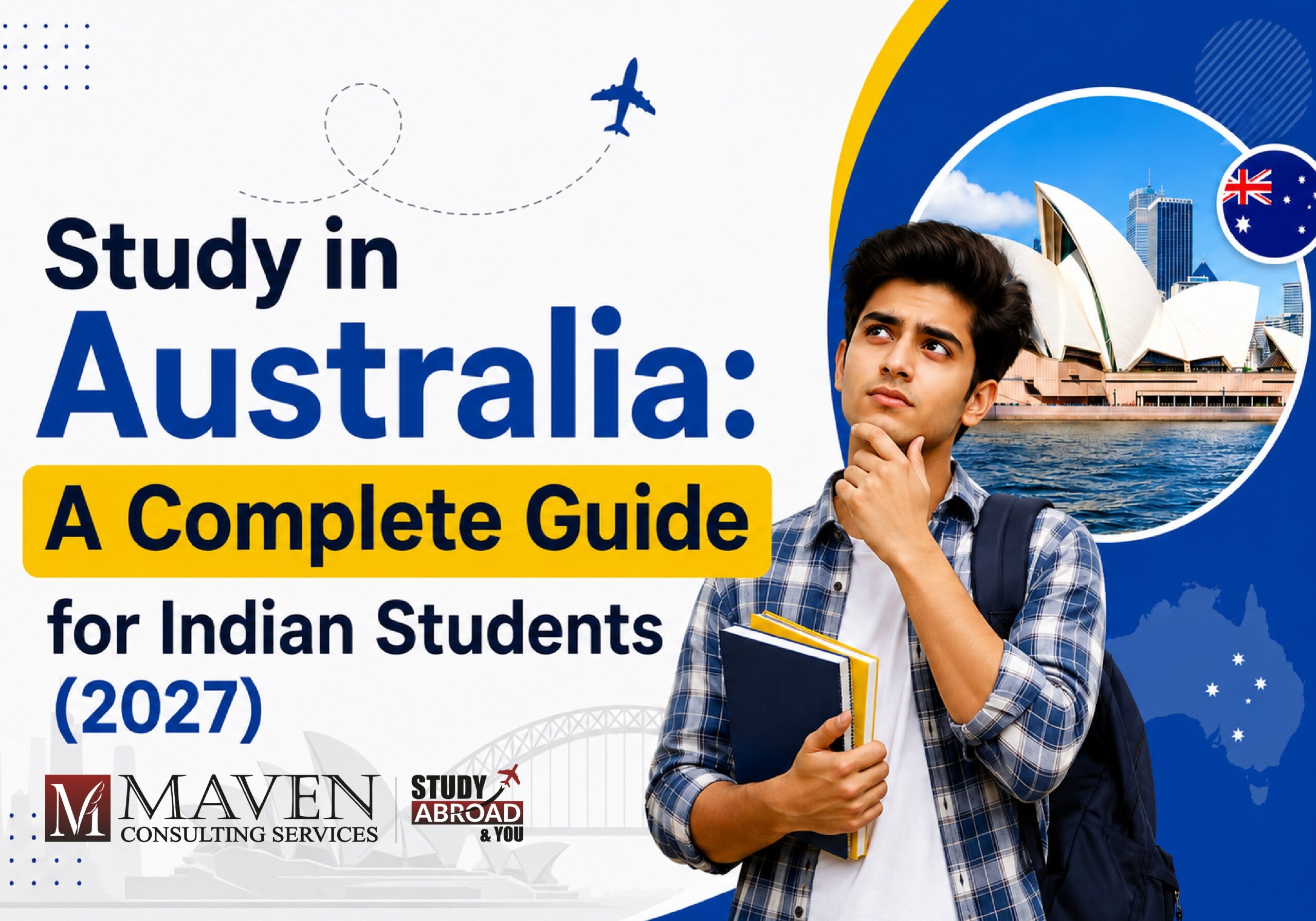
Deciding to study in Australia is a major decision. Australia has quietly become one of the top three destinations for Indian students, and for good reasons: eight globally ranked universities, a genuinely strong graduate job market, and one of the clearest study-to-PR routes anywhere. The rules tightened sharply through 2024–26, so this guide gives you the current picture — costs, visa, work rights and what comes after — framed for students planning the 2027 intakes (February and July 2027), without the gloss.
If Australia is on your shortlist, read this alongside our Study in Australia hub, our upcoming 485 Graduate Visa deep-dive, and our UK vs USA comparison if you’re still weighing destinations.
When you choose to study in Australia, you gain access to world-class education, strong post-study work rights and a vibrant multicultural society.
When you study in Australia, you can attend some of the world’s top institutions. Australia’s research powerhouses are the “Group of Eight”: the University of Melbourne, Australian National University (ANU), University of Sydney, UNSW Sydney, Monash University, University of Queensland (UQ), University of Western Australia (UWA) and the University of Adelaide. Outside the Go8, universities like UTS, RMIT, QUT and Macquarie are excellent — and often more affordable.
The total cost to study in Australia depends heavily on your course level, university and city of study.
Tuition varies widely by course and university (latest confirmed figures for the 2026–27 cycle, in AUD per year — expect modest annual increases for 2027):
| Programme | Typical tuition (AUD/year) |
|---|---|
| Undergraduate (general) | $20,000 – $45,000 |
| Postgraduate (coursework) | $22,000 – $50,000 |
| Engineering / IT | $40,000 – $55,000 |
| Medicine / Dentistry | $65,000 – $85,000 |
| Go8 flagship / MBA | $60,000 – $95,000+ |
Living costs depend heavily on the city. Sydney and Melbourne are the priciest; Adelaide, Gold Coast and regional campuses are far gentler on the budget (and regional study can unlock a longer 485 visa).
This is the visa nearly every Indian student needs. The key 2026 facts:
| Requirement | 2026 detail |
|---|---|
| Application fee | AUD 2,000 (from 1 July 2025) |
| Living-cost funds | AUD 29,710/yr + tuition + travel |
| Partner / child | +AUD 10,394 / +AUD 4,449 |
| Genuine Student (GS) | Replaced GTE in 2024 — explain your course & career fit |
| English | IELTS 6.0 min (most unis want 6.5–7.0) |
| Health cover | OSHC mandatory for full stay |
Student visa holders can work up to 48 hours per fortnight while the course is in session (a “fortnight” is any rolling 14-day period — a common compliance trap), and unlimited hours during official breaks. Masters by research and PhD students have no cap once the course starts. With the national minimum wage around AUD 24.95/hour, this provides meaningful living-cost support — but, as always, it won’t fund your tuition.
The Temporary Graduate visa (subclass 485) lets you live and work in Australia after your degree:
We cover this route in depth in our dedicated 485 Graduate Visa deep-dive.
The student visa doesn’t lead to PR directly, but Australia’s route is among the clearest. After graduating, the 485 visa buys time to gain experience, after which you can pursue:
Occupations on Australia’s skills-in-demand list have the strongest pathways. Note that minimum skilled salaries have risen (around AUD 76,515 for most sponsored streams from July 2025).
“Australia rewards planning more than almost any other destination. The study-to-PR route is real and clear — but only if you choose your course, your city and your occupation with PR in mind from the start, not as an afterthought. The 2026 fee hikes and the move to Evidence Level 3 for Indian applicants mean there’s no room for a sloppy application anymore. Done right, Australia offers one of the best risk-adjusted returns of any country we work with. Done carelessly, it’s an expensive refusal.”
Because India is a high-volume country, visa processing can take three months or more. Apply 4–6 months ahead of your intake, with a complete, error-free file. Australia also manages overall numbers through a national planning level (around 295,000 new international student commencements in 2026), so expect the 2027 cycle to stay competitive — early, well-prepared applications have the edge.
Tuition is roughly AUD 20,000–50,000 a year (medicine and Go8 programs higher). When you study in Australia in Sydney or Melbourne, budget AUD 55,000–65,000+ per year all-in for a single student.
From 1 July 2025 the student visa to study in Australia costs AUD 2,000 per primary applicant. You must also show AUD 29,710 in living-cost funds, plus tuition and travel.
Yes — students who study in Australia can work up to 48 hours per fortnight during study and unlimited hours during official breaks. Masters by research and PhD students have no cap once the course starts.
At least AUD 29,710 for the year, plus tuition and return travel. A partner adds AUD 10,394 and each child AUD 4,449. From January 2026 Indian files face Evidence Level 3 scrutiny, so documents must be genuine and well-organised.
It lets you work after graduation — about 2 years for a bachelor’s/master’s (up to 5 for regional study) and longer for doctoral graduates. Its fee rose to AUD 4,600 in March 2026.
Not directly. For those who study in Australia, the 485 visa gives you time to gain experience, after which skilled migration (189/190/491) or employer sponsorship (482/186) can lead to PR.
February (main), July (second major) and a smaller November intake at some universities for those looking to study in Australia. Apply 4–6 months early as Indian processing can take three months or more.
The visa minimum is generally IELTS 6.0 overall, but most universities want 6.5–7.0, and competitive postgraduate courses increasingly expect 7.0+.
Maven builds Australian applications to Evidence Level 3 standard, maps your course and city to PR pathways, and times your intake right — commission-free, 99.8% visa success rate.
Book a Free Consultation
Sunday, October 26, 2025 | The Taj MG Road, Bangalore | 10 AM – 4 PM