WhatsAppCHAT
CALL US& CONNECT

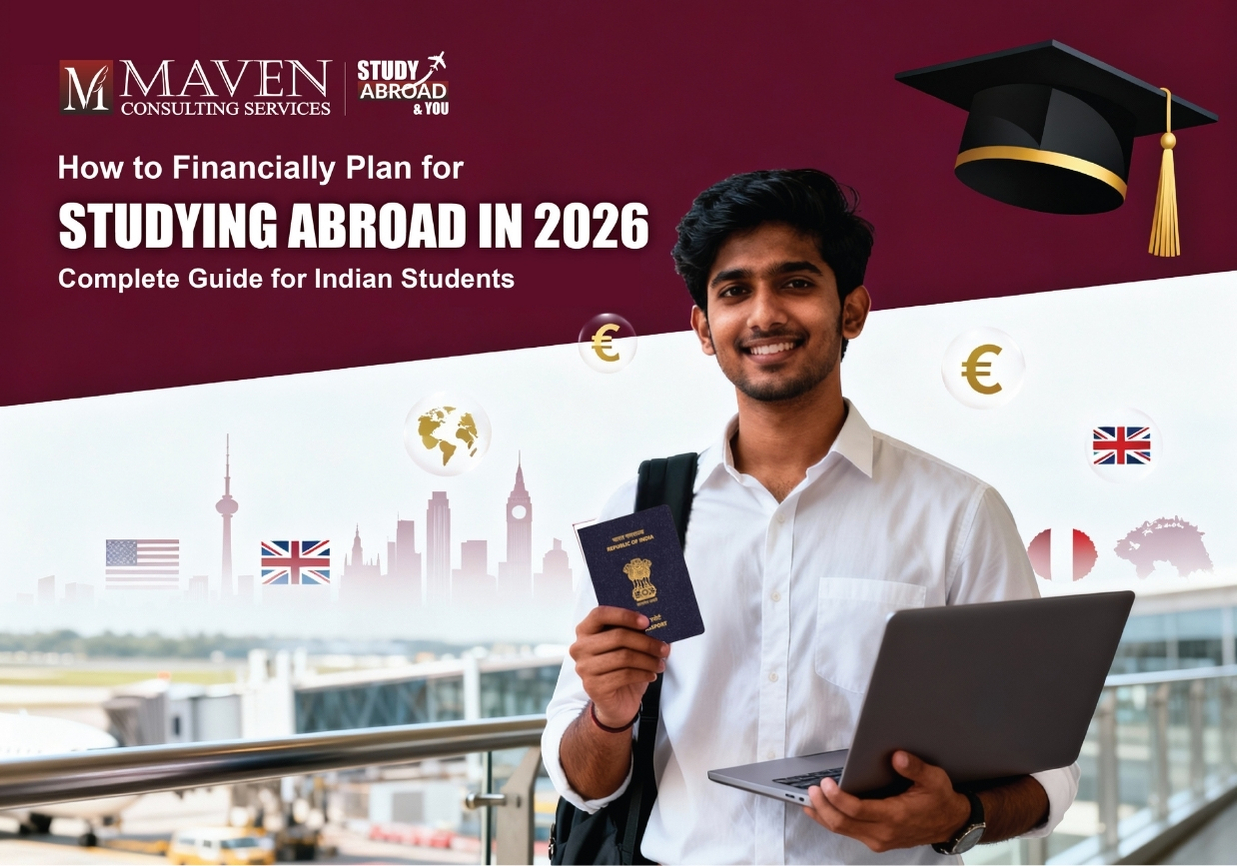
Financial Planning for Studying Abroad in 2026 has become more important than ever for Indian students aiming to build a successful future abroad. Studying overseas remains one of the most meaningful investments you can make, but it also demands disciplined study abroad financial planning. With global tuition fees steadily rising and many countries tightening their visa financial requirements, understanding exactly how to prepare your finances before applying is essential for a smooth journey.
As head counsellors in overseas education consulting, we meet countless families who underestimate the total cost of studying abroad. This guide breaks the process down into simple steps and helps you create a strong, realistic, and stress-free financial roadmap for your international education journey. Effective financial planning for studying abroad in 2026 helps students avoid unexpected financial stress.
Smart study abroad budget planning begins with clear cost estimation. Students often focus only on tuition fees, but the cost of studying abroad includes multiple components that influence your overall financial readiness.
Major Cost Components
• Tuition Fees
Tuition varies by country, university ranking, and course type. STEM and business programs, especially analytics, healthcare, and engineering, generally have higher tuition fees.
• Accommodation
Accommodation is a major part of international study abroad expenses. Options include:
• Food and Daily Living Costs
Living expenses abroad for Indian students typically include groceries, utilities, phone bills, transportation, and occasional dining out. Cities like Toronto, London, and Sydney tend to have a higher cost of living.
• Health Insurance and Medical Expenses
International student health insurance is mandatory in countries like the USA, UK, Australia, Canada, and Germany. It protects against unexpected medical costs.
• Visa and Travel Costs
Visa fees, biometrics, UK health surcharge, and travel tickets fall under your visa and travel expenses.
• Personal & Miscellaneous Expenses
These include books, study materials, subscriptions, winter clothing, and personal items.
• Emergency Expenses
Always account for an emergency fund for students to handle unforeseen situations such as urgent travel or medical needs.

Most families rely on an education loan for Indian students to finance overseas education. Choosing the right loan requires comparing interest rates, coverage, and repayment terms.
Secured (Collateral-Based) Loans
Unsecured (Non-Collateral) Loans
Key Loan Comparison Factors
Evaluate lenders based on:
A good loan choice supports long-term financial stability—not just admission.


Scholarships are key for smart financial planning for studying abroad in 2026, playing an important role in controlling the cost of it all. Students should start early and explore various categories of scholarship opportunities in 2026.
RELATED: Best Scholarships for Indian Students 2026: The Ultimate Guide
Scholarship Categories
How to Increase Your Chances

Managing study abroad expenses smartly determines how comfortably you live. With the high cost of living, especially in Western countries, saving strategies make a huge difference.
Effective Ways to Reduce Living Costs
With disciplined habits, students can reduce 20–30% of their monthly costs.

A monthly budget provides clarity and helps prevent overspending. Top budgeting apps for students include Mint, YNAB, WISE, and Revolut.
Your monthly plan should include:
A strong budget ensures your study abroad financial planning stays consistent.
When creating your budget, include all cost categories as part of your financial planning for studying abroad in 2026.

An emergency fund ensures you’re never caught unprepared. This fund protects against:
Even a small financial buffer makes your overseas experience more secure.

Many countries allow international students to work part-time. This income can support groceries, transport, and basic utilities.
Key Considerations
Part-time work also strengthens your resume for future job opportunities.


The 2026 intake presents new challenges:
A thorough study abroad financial planning strategy is essential for success—and significantly improves your chances of visa approval.
Your research and this expanded guide transforms outlines a practical, detailed strategy for Indian students preparing for international education.
From understanding the cost of studying abroad, to leveraging scholarships, comparing education loans, and implementing smart budgeting, the right plan empowers students to focus on academics and personal growth, not financial stress.
Connect with us today for an efficient study abroad plan, including financial planning for studying abroad; one which gives you all rounded security and the confidence to pursue you study abroad dreams.