WhatsAppCHAT
CALL US& CONNECT

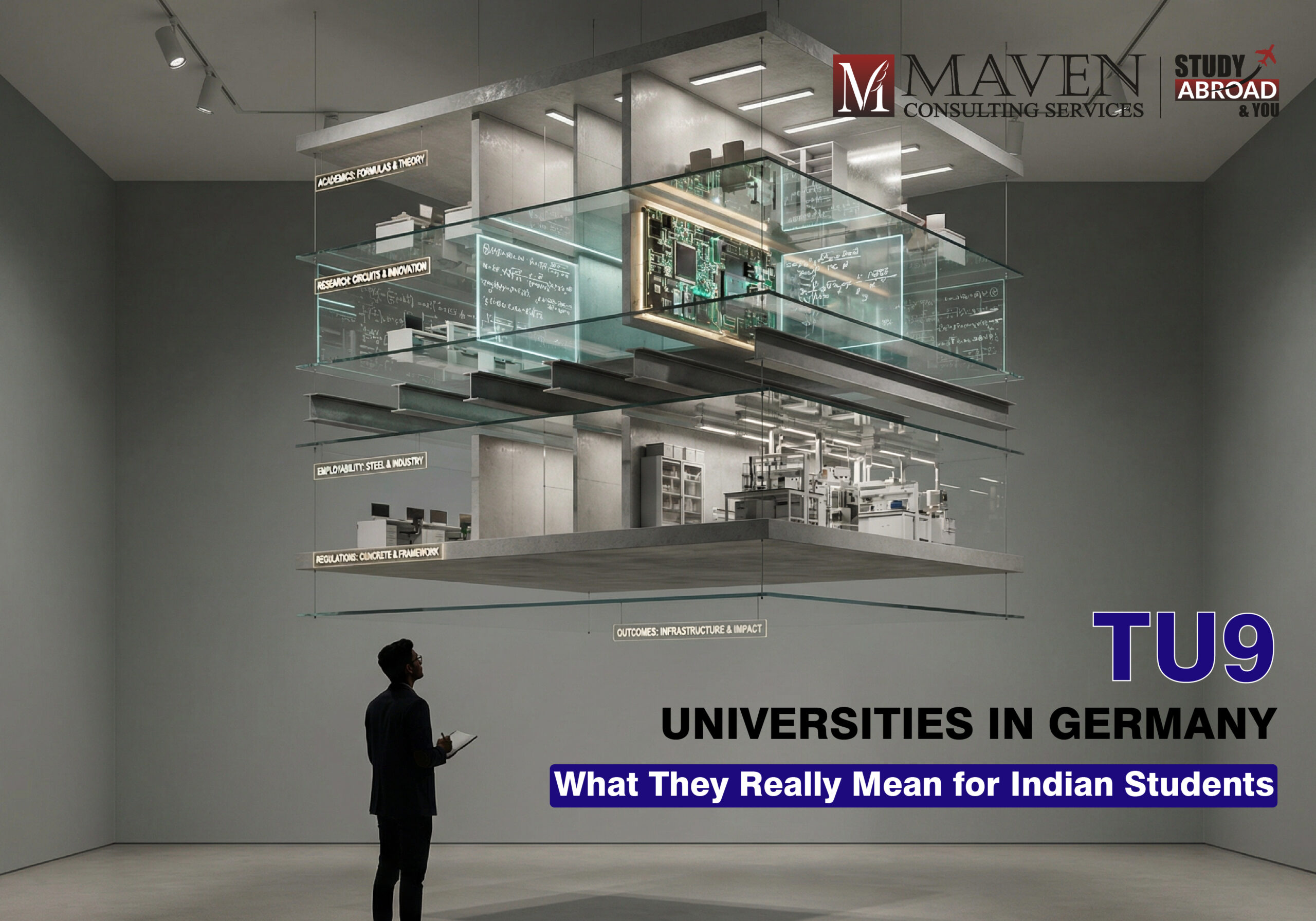
Every year, the search for ‘TU9 Universities‘ starts hiking among Indian students applying to Germany. It appears in WhatsApp groups, LinkedIn posts, Reddit threads, and YouTube thumbnails, often framed as “Germany’s IITs” or “the only universities worth applying to.”
That framing is tempting. It’s also incomplete.
Because TU9 is not just a list of top universities. It’s a signal. And like all signals, it only makes sense if you understand who it’s meant for, and who it isn’t.
This blog isn’t here to sell the dream. It’s here to explain the reality.
Source: TU9 universities
TU9 is an alliance of nine technical universities that collaborate on research, policy influence, and industry partnerships. It was never designed as a public-facing ranking system.
What Germany is signalling through TU9 is simple:
This is where deep engineering, applied science, and research-intensive work happen.
Global rankings often miss this because they reward visibility, citations, and branding. TU9 rewards output, rigour, and contribution to industry and research pipelines, much of which happens quietly.
If you approach TU9 thinking it’s just “top-ranked universities,” you miss the point.
Calling TU9 “Germany’s Ivy League” sounds impressive. It’s also lazy.
TU9 universities don’t behave like:
What surprises Indian students most in Year 1 isn’t the difficulty, it’s the absence of structure. No one tracks attendance. No one checks if you’re falling behind. And no one rescues you mid-semester.
TU9 assumes one thing from Day 1: you’re already an adult learner.
If these universities were people, they wouldn’t all look alike.
Then there are the underrated choices:
Prestige exists across TU9, but fit varies massively.
While TU9 universities are often spoken about as a single group, each one has its own academic strengths, city advantages, and program focus. The table below shows where each TU9 university is located, and the kind of Master’s programs Indian students typically apply for.
| TU9 Universities | City | Popular Master’s Programs (Examples) |
| Technical University of Munich (TUM) | Munich | MSc Informatics • MSc Data Engineering & Analytics • MSc Robotics, Cognition & Intelligence |
| RWTH Aachen University | Aachen | MSc Data Science • MSc Electrical Engineering • MSc Simulation Sciences |
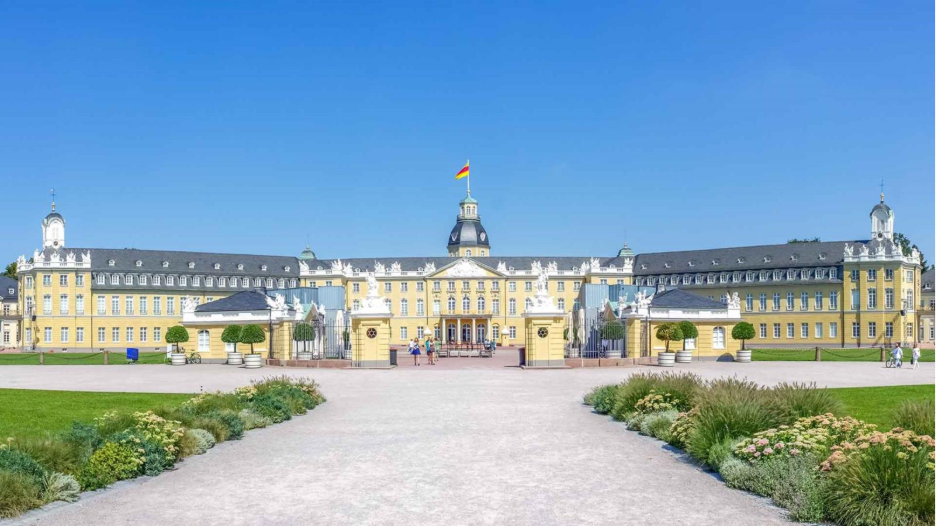
| Karlsruhe Institute of Technology (KIT) | Karlsruhe | MSc Computer Science • MSc Information Systems Engineering & Management • MSc Energy Engineering |
| Technical University of Berlin (TU Berlin) | Berlin | MSc Computer Science • MSc ICT Innovation • MSc Production Engineering |
| Technical University of Darmstadt (TU Darmstadt) | Darmstadt | MSc Computer Science (AI/ML, Visual Computing) • MSc Data Science • MSc Mechanical Engineering |
| Technical University of Dresden (TU Dresden) | Dresden | MSc Computational Modelling • MSc Biotechnology • MSc Hydro Science & Engineering |
| University of Stuttgart | Stuttgart | MSc Computer Science • MSc Automotive Engineering • MSc Mechanical Engineering |
| Leibniz University Hannover | Hannover | MSc Computer Science • MSc Data Science • MSc Economics |
| Technical University of Braunschweig | Braunschweig | MSc Data Analytics • MSc Computer Science in Engineering • MSc Automotive Engineering |
Germany’s education system is built around specialisation, not exploration.
Undergraduate education is largely German-taught and designed for students already embedded in the system. That’s why English-taught Bachelor’s programs are rare at TU9, and not an oversight.
Master’s programs, however, are where TU9 opens its doors globally. That’s where Indian students fit best: focused, specialised, and academically prepared.
TU9 doesn’t want to teach you the basics. It wants to see what you do once you already know them.
Yes, tuition can be €0.
No, education is not free.
Semester contributions cover administration and transport, but rent, health insurance, food, deposits, and daily life add up quickly.
Munich tests ambition with cost. Dresden tests patience with bureaucracy. Berlin tests discipline with distractions.
The mistake students make is focusing only on tuition while ignoring city economics. TU9 doesn’t feel the same everywhere.
An English-taught program doesn’t mean an easy one.
Many students assume the hardest part is getting admitted. In reality, the filtering starts after admission, through coursework, group projects, and self-study expectations.
The German language is rarely mandatory for the classroom, but it quietly becomes power in daily life, internships, and job searches. Those who treat German as optional survive. Those who treat it as leverage thrive.
This is where the biggest myth breaks.
High CGPA alone doesn’t guarantee admission. TU9 evaluates:
That’s why some 9+ CGPA profiles get rejected, while some 7.8 profiles get in. German universities don’t reward potential. They reward preparedness.
They’re asking: Can you survive here without hand-holding?
A surprising number of TU9 rejections happen before academics are even reviewed.
APS delays, incomplete Uni-Assist submissions, missed timelines, these quietly end strong applications. German systems don’t chase you. They simply move on.
The students who succeed aren’t smarter. They’re earlier.
Failure rates of 60–80% in certain core modules aren’t scandals in Germany. They’re signals.
No attendance policing. No reminder emails. No second chances.
The ones who survive aren’t necessarily the brightest, but they are disciplined, independent, and emotionally steady under pressure.
TU9 doesn’t test intelligence. It tests endurance.
No placement cells are waiting with offers.
Instead, companies like BMW, Siemens, Bosch, and startups hire through:
After Year 1, grades matter less than how visible and proactive you are.
DAAD scholarships aren’t rewards, they’re filters.
Most funding opportunities come after admission, not before. And many students unknowingly disqualify themselves by missing timelines or misunderstanding criteria.
Scholarships reward consistency, not desperation.
TUM Computer Science carries global prestige, and global pressure. It’s not for everyone.
RWTH leans research-heavy. KIT rewards systems thinking. Darmstadt focuses on depth over branding.
Choosing the “second-best” on paper is often the smartest long-term decision.
Some thrive, build networks, learn German, land strong roles.
Some burn out, overwhelmed by freedom, pressure, and isolation.
The common thread?
Those who planned emotionally and structurally did better than those who chased brand names blindly.
TU9 suits students who:
It’s harder for those who rely on structure, constant feedback, or last-minute recoveries.
Will this environment make me better—or just busier?
TU9 amplifies what you already are. It doesn’t fix gaps.
TU9 is an opportunity, not a guarantee.
The students who succeed aren’t the ones with the strongest resumes—but the ones with the clearest strategies.
At Maven, we’ve seen what quiet planning can do—and what blind ambition can undo.
Sometimes, the smartest move isn’t aiming higher.
It’s aiming right.
Thinking about TU9 and unsure where you fit?
A conversation early can change everything later.
We don’t just help you apply.
We help you choose wisely.