WhatsAppCHAT
CALL US& CONNECT

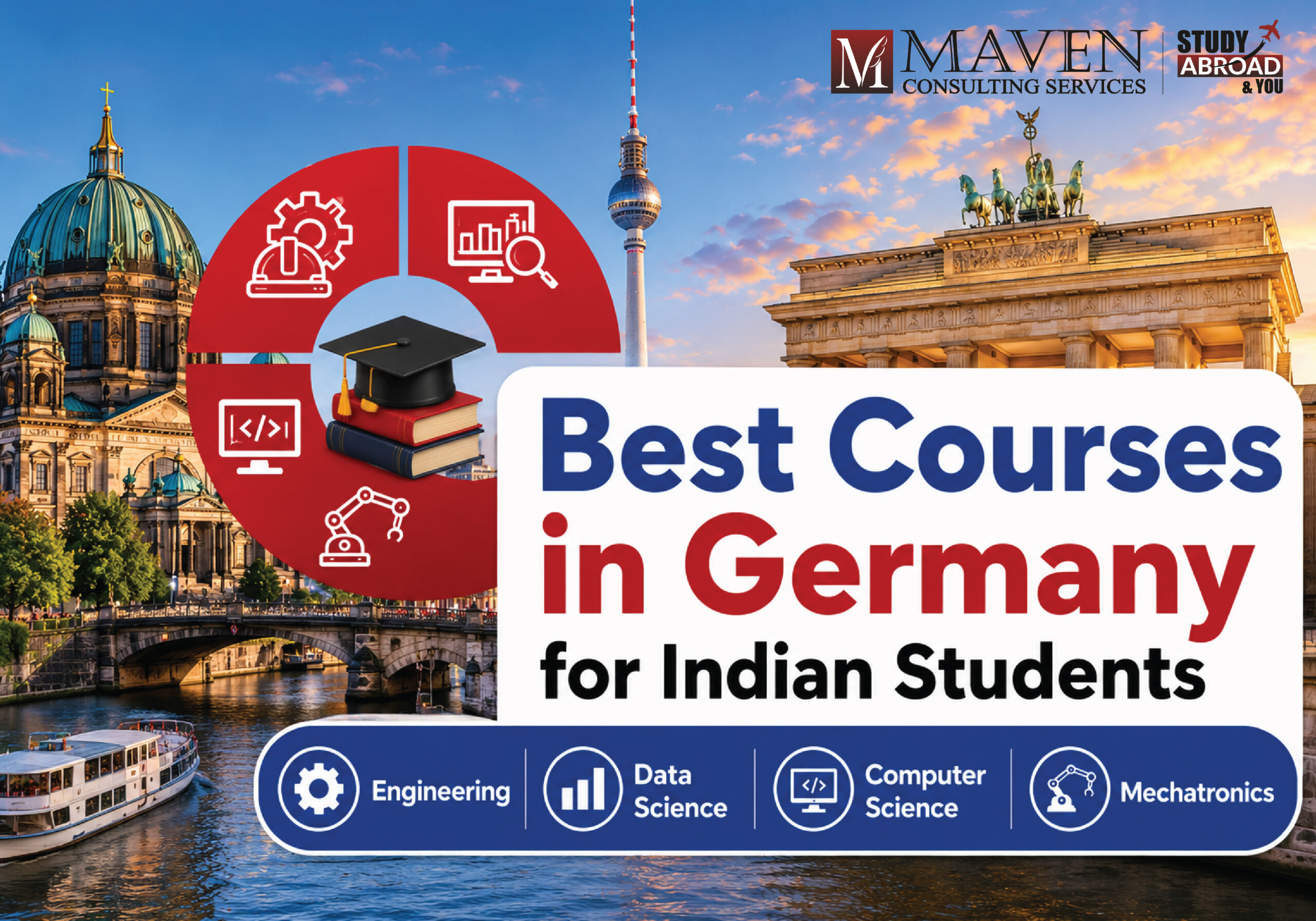
Engineering, Data Science, CS, Mechatronics and more, a field-by-field guide to the highest-ROI degrees, with salary data, EU Blue Card eligibility, and Maven’s expert picks.
| QUICK ANSWER |
|---|
| The best courses in Germany for Indian students in 2026 are Mechanical Engineering, Computer Science, Data Science & AI, Electrical Engineering, and Mechatronics — all offering tuition-free public university education, EU Blue Card eligibility, starting salaries of €42,000–€70,000+, and strong pathways to German PR within 27 months. Business Analytics and Renewable Energy Engineering are strong second-tier picks. |
In most study destinations, the choice of university carries more weight than the choice of course. Germany is different. Because public university tuition is effectively zero (€150–€350/semester in administrative fees), the ROI equation shifts almost entirely to what you study, not what you pay.
Your course determines:
Get the course right and Germany becomes one of the world’s best study-and-settle destinations. Get it wrong and you may graduate from an excellent university with a credential that doesn’t translate into German employment.
At Maven, we evaluate courses for Germany across six dimensions:
| Dimension | Criterion | What We Look At |
|---|---|---|
| Employability | Graduate job market absorption | Within 12 months of graduation in Germany |
| Starting Salary | Entry-level annual salary (EUR) | 2026 German market data |
| EU Blue Card Access | Shortage occupation eligibility | Lower salary threshold qualification |
| Indian Student Fit | English availability, APS, CGPA norms | Accessibility for Indian applicants |
| PR Pathway Strength | Speed to permanent residency | Niederlassungserlaubnis timeline |
| Return Option | Credential recognition in India | For families considering return |
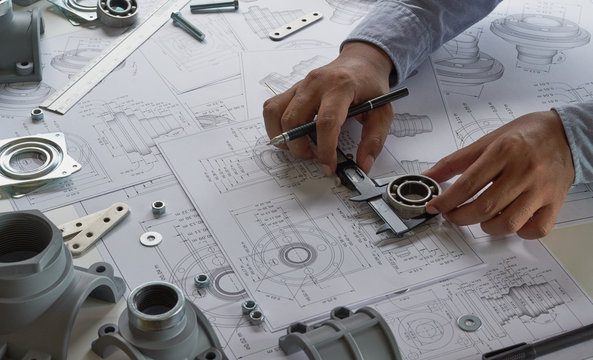
Germany’s engineering heritage is built on this foundation. With BMW, Mercedes-Benz, Bosch, Siemens, and Schaeffler headquartered here, mechanical and automotive engineers are in perpetual demand. For Indian students with a BE/B.Tech in Mechanical or related fields, this is the single most natural and high-return pathway.
| Avg. Starting Salary: €42K–€56K | Blue Card Eligible: Yes | English Programs: ~300+ | Job Seeker Visa: Eligible |
Production Engineering, Vehicle Engineering, Mechatronic Systems, Simulation Technology, Energy-Efficient Engineering. Automotive Lightweight Design is a niche with strong hiring.
| Rajshekar Tubachi, Maven Consulting — Founder Perspective At Maven, Mechanical Engineering in Germany is our most-requested stream — and for good reason. We’ve placed students at RWTH, TU Munich, and Stuttgart who now work at Bosch, Continental, and BMW. But I always tell students: your German B2 language skill will separate you from the pack at interview stage, even if the job listing says English is fine. |
Germany’s tech sector has transformed dramatically. Berlin, Munich, Hamburg, and Frankfurt have emerged as European tech hubs, hosting SAP, Zalando, Delivery Hero, Celonis, and the German arms of Microsoft, Google, Amazon, and Meta. For Indian students — many already from a CS/IT background — this field offers some of the most accessible entry points and highest salaries.
| Avg. Starting Salary: €48K–€65K | Blue Card Eligible: Yes | English Programs: ~500+ | Competition Level: High |
CS at TU Munich and TU Berlin is intensely competitive for Indian applicants. A CGPA below 8.5/10, a weak Statement of Purpose, or no internship portfolio will screen you out. Maven works with applicants to craft compelling applications — contact us early (18+ months before intended intake).
| Rajshekar Tubachi, Maven Consulting — Founder Perspective CS in Germany is a genuine career accelerator — but the application process has gotten tougher. We’re seeing TU Munich shortlist candidates with 9.0+ CGPA, strong project work, and ideally a published paper or research internship. Don’t apply cold. Invest 3–4 months in application prep. |
This is the fastest-growing field for Indian applicants in Germany. Dedicated MSc programmes in Data Science, AI, and Machine Learning have proliferated across German universities, with many designed specifically for English-medium delivery. The job market is voracious — and the Blue Card salary thresholds are comfortably achievable in this sector.
| Avg. Starting Salary: €50K–€70K | Blue Card Eligible: Yes | English Programs: ~200+ | Growth Outlook: Strong |
Candidates with a BTech in CSE, IT, Electronics, or Mathematics — particularly those with Python, R, SQL proficiency and ML framework exposure — are well-positioned. Even Tier-2 Indian college graduates with strong project portfolios have secured admits to University of Mannheim and TU Darmstadt.
| Rajshekar Tubachi, Maven Consulting — Founder Perspective Data Science in Germany is the sweet spot for Indian students right now. The programmes are newer, so competition is slightly less fierce than classic CS. Companies like SAP, Allianz, Deutsche Telekom, and BMW’s digital division are actively hiring. And €50,000–€65,000 starting salary crosses the Blue Card threshold comfortably. |

Germany’s industrial base — power systems, semiconductor manufacturing, telecommunications, and embedded hardware — creates steady demand for electronics engineers. For Indian students from ECE, EEE, or E&TC backgrounds, this is a natural bridge. Infineon Technologies, Osram, Siemens Energy, and Phoenix Contact recruit directly from German university campuses.
| Avg. Starting Salary: €44K–€58K | Blue Card Eligible: Yes | Shortage Status: Yes | English Programs: ~180+ |
| Rajshekar Tubachi, Maven Consulting — Founder Perspective ECE students from India often underestimate how strong their background is for German Master’s programmes. The depth of analogue electronics and signal processing taught at Indian universities — especially NITs and top state engineering colleges — is genuinely valued here. German universities look for fundamentals, not just coding skills. |

Mechatronics — the intersection of mechanical, electrical, and software engineering — is a field Germany essentially invented and still leads. As automation and Industry 4.0 reshape German manufacturing, mechatronics engineers are among the most sought-after graduates. This field suits students who straddle the Mechanical–ECE boundary or have an interest in robotics and automation.
| Avg. Starting Salary: €44K–€60K | Blue Card Eligible: Yes | English Programs: ~120+ | Industry Demand: Very High |
| Rajshekar Tubachi, Maven Consulting — Founder Perspective Mechatronics is perhaps the most underutilised opportunity for Indian students in Germany. Students from Mechanical, ECE, or Instrumentation backgrounds can all apply — and the hiring companies include Festo, Kuka, Bosch, and Trumpf. We strongly recommend it to students who feel ‘between’ the classic MECH and ECE tracks. |

Management education in Germany is a mixed picture for Indian students. Programs at ESMT Berlin, Mannheim Business School, and WHU are genuinely world-class — but they are private, fee-charging (€20,000–€50,000+), and highly competitive. Public university management programmes are cheaper but have lower global recognition. The Blue Card pathway is available but harder to clear in non-STEM management roles.
| Avg. Starting Salary: €42K–€55K | Blue Card Eligible: Conditional | English Program: ~400+ | Top School Fees: €20K–€50K |
| Honest Assessment Generic ‘International Business’ at lesser-known Fachhochschulen: These programmes are not well-regarded by German employers and visa conversion rates are lower. If you are committed to Management in Germany, target either a top-3 private MBA or a STEM-adjacent programme (Business Informatics, Management & Technology). The ROI gap between good and mediocre management programmes in Germany is substantial. |
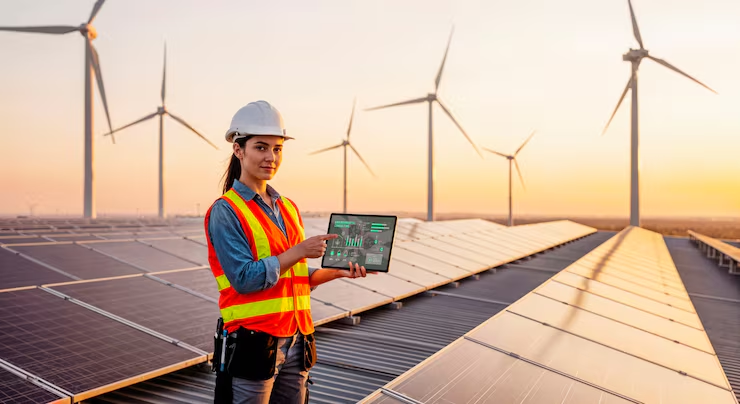
Germany’s Energiewende — its national energy transition — has created a structural talent shortage in wind energy, solar, hydrogen, and grid engineering. For Indian students passionate about sustainability and with an engineering foundation, this is a relatively undercompeted niche that offers genuine employment security in Germany’s rapidly expanding clean energy sector.
| Avg. Starting Salary: €42K–€55K | Blue Card Eligible: Yes | English Programs: ~80+ | Demand Trajectory: Rising Fast |
| Rajshekar Tubachi, Maven Consulting — Founder Perspective: Renewable Energy is a field we’re increasingly recommending to Mechanical and EEE students who want to differentiate themselves. The German solar, wind, and hydrogen sectors are booming — and unlike CS and classic Mechanical, this field has fewer Indian applicants, which means better odds at strong universities. |
Maven believes in honest counsel. These programmes attract Indian students but carry documented challenges:
| 1 | Generic MBA / International Business (low-ranked Fachhochschulen): Poor recognition among German employers. Job Seeker Visa granted, but finding a qualifying job is hard. Blue Card salary threshold is harder to clear. Return value to India is also limited. |
| 2 | Pure Humanities and Social Sciences: German-language requirement is usually mandatory. Job market absorption is significantly lower. Not Blue Card eligible for most roles. For Indian students from non-EU backgrounds, this pathway rarely leads to stable post-graduation settlement. |
| 3 | Architecture (unless at TU Berlin / TU Munich): Architecture in Germany is a 5-year professional programme in most cases. Indian 4-year B.Arch graduates often face credit shortfalls. Employment post-graduation is slower and salaries are lower than STEM fields. Only consider if Architecture is your clear passion and you’re applying to the top-2 schools. |
| 4 | Physics / Chemistry (unless targeting R&D): Excellent academic fields but require either a PhD for meaningful career progression or a pivot to industry roles. If your goal is stable employment within 18 months of graduation, these are higher-risk picks than Engineering or CS. |
| English-Medium Programmes | German-Medium Programmes |
|---|---|
| 1,500+ accredited programmes in 2026 | Require TestDaF (TDN 4) or DSH-2 proof |
| Most STEM Master’s degrees at top universities | Undergraduate programmes mostly German-medium |
| Require TOEFL (80+) or IELTS (6.5+) | Stronger integration into German professional culture |
| No German required at admission | Higher employability at German SME companies |
| German A2–B1 still recommended for career | Required for most Fachhochschule programmes |
| Job interviews in English at multinationals | Maven recommends B2 minimum before arrival |
| Rajshekar Tubachi, Maven Consulting — Founder Perspective At Maven, we tell every student this: even if you’re in an English-medium programme, invest in reaching B1/B2 German before you land. The difference in your ability to network, get internships, and negotiate your first job is enormous. Language is not an optional extra; it is career infrastructure. |
| 🔵 EU Blue Card — Key Facts for 2026 | ||
| General Salary Threshold: €45,300 / year | Shortage Occupations Threshold: €41,042 / year | Shortage Fields: Engineering, IT, Healthcare |
| PR Timeline (Blue Card): 27 months (21 with B1 German) | Job Seeker Visa Duration: 18 months post-graduation | Standard Work Permit PR: 5 years employment |
The EU Blue Card is the golden pathway for Indian STEM graduates in Germany. Engineering, Computer Science, Data Science, and Mechatronics graduates who secure jobs at the shortage-occupation threshold (€41,042+) can apply for Blue Card status from day one — and begin their PR countdown immediately.
This makes the PR timeline in Germany comparable to or faster than Canada and Australia for skilled STEM graduates — without requiring a provincial nomination lottery or points draw. The key is course alignment: a degree in a recognised field from an accredited German university is the non-negotiable prerequisite.
Based on our experience placing Indian students in German universities, here are our highest-confidence recommendations:
| Course | University | Language | Fees/Sem | Avg. Starting Salary | Blue Card |
|---|---|---|---|---|---|
| MSc Mechanical Engineering | RWTH Aachen | English | ~€300 | €44,000–€56,000 | ✅ Yes |
| MSc Informatics / CS | TU Munich | English | ~€250 | €50,000–€65,000 | ✅ Yes |
| MSc Data Science | Univ. of Mannheim | English | ~€1,500/yr | €50,000–€68,000 | ✅ Yes |
| MSc Data Engineering | TU Munich | English | ~€250 | €52,000–€70,000 | ✅ Yes |
| MSc Mechatronics & Robotics | TU Munich | English | ~€250 | €44,000–€60,000 | ✅ Yes |
| MSc Electrical Engineering | RWTH Aachen | Eng/German | ~€300 | €44,000–€58,000 | ✅ Yes |
| MSc Machine Learning | Univ. of Tübingen | English | ~€300 | €52,000–€70,000 | ✅ Yes |
| MSc Automotive Engineering | Univ. of Stuttgart | Eng/German | ~€250 | €44,000–€58,000 | ✅ Yes |
| MSc Management & Technology | TU Munich | English | ~€250 | €46,000–€58,000 | ⚠️ Conditional |
| MSc Business Informatics | Univ. of Mannheim | English | ~€1,500/yr | €46,000–€60,000 | ✅ Yes |
| MSc Renewable Energy Eng. | RWTH Aachen | English | ~€300 | €42,000–€55,000 | ✅ Yes |
| MSc Communications Eng. | TU Munich | English | ~€250 | €46,000–€60,000 | ✅ Yes |
1. Which course is best for Indian students in Germany?
Mechanical Engineering, Computer Science, Data Science & AI, Electrical Engineering, and Mechatronics are the strongest choices in 2026. All offer tuition-free public university options, EU Blue Card eligibility, and starting salaries of €42,000–€70,000+. Business Analytics at a top school is a strong secondary option.
2. Can Indian students study in Germany in English?
Yes. Over 1,500 Master’s programmes in Germany are fully English-medium as of 2026. Most STEM disciplines at universities like TU Munich, RWTH Aachen, KIT, and TU Berlin offer English-taught degrees. TOEFL (80+) or IELTS (6.5+) is the standard English requirement.
3. What is the EU Blue Card and which courses qualify?
The EU Blue Card is a fast-track work and residency permit for skilled graduates. In Germany (2026), the general salary threshold is €45,300/year; for shortage occupations (Engineering, IT, Healthcare), the threshold is €41,042/year. Blue Card holders can apply for PR in 27 months (21 months with B1 German).
4. What salary can Indian students expect after studying in Germany?
Entry-level salaries for STEM graduates in Germany in 2026 range from €40,000 to €70,000+ per year. Data Science and AI/ML roles command €50,000–€70,000. Mechanical and Automotive Engineering roles start at €42,000–€56,000. Management graduates typically see €42,000–€55,000.
5. Do I need to know German to study in Germany?
Not for admission to most STEM Master’s programmes. However, B1/B2 German is strongly recommended for career integration. German proficiency accelerates job-hunting, networking, and the PR timeline. Maven recommends beginning German language training 12+ months before your intended departure.
6. How long does it take to get PR in Germany after studying?
With an EU Blue Card, you can apply for permanent residency after 27 months of qualifying employment (21 months with B1 German). Without Blue Card, on a standard work permit, you need 5 years of employment. This makes the Blue Card pathway significantly faster.
7. Which German universities are best for Indian students?
TU Munich, RWTH Aachen, University of Mannheim, KIT Karlsruhe, TU Berlin, University of Stuttgart, LMU Munich, and Heidelberg University are consistently the strongest choices. Public universities charge only a semester contribution (€150–€350), making them exceptional value.
8. What is the APS certificate and do all Indian students need it?
The APS (Academic Evaluation Centre) certificate is required for Indian students applying to German universities. It verifies the authenticity of Indian academic credentials. The process involves an in-person interview at the German Consulate in Chennai, Mumbai, or New Delhi. Most German universities will not process your application without it. Allow 4–6 months for processing.
Maven Consulting Services has helped hundreds of Indian students secure admits and visas for Germany’s top universities. From APS certificate preparation and TOEFL coaching to university shortlisting, SOP writing, and visa application, we handle the entire journey.