WhatsAppCHAT
CALL US& CONNECT


Updated: May 9, 2026
If you’re planning to study abroad, chances are Germany is already on your shortlist, and honestly, that’s a smart move. With globally recognised degrees, strong job prospects, and relatively affordable living costs, Universities in Germany offer a solid return on investment for international students, especially from India.
That said, once Germany is locked in, the next big question usually pops up in counselling sessions:
How do I choose between public universities vs private universities in Germany?
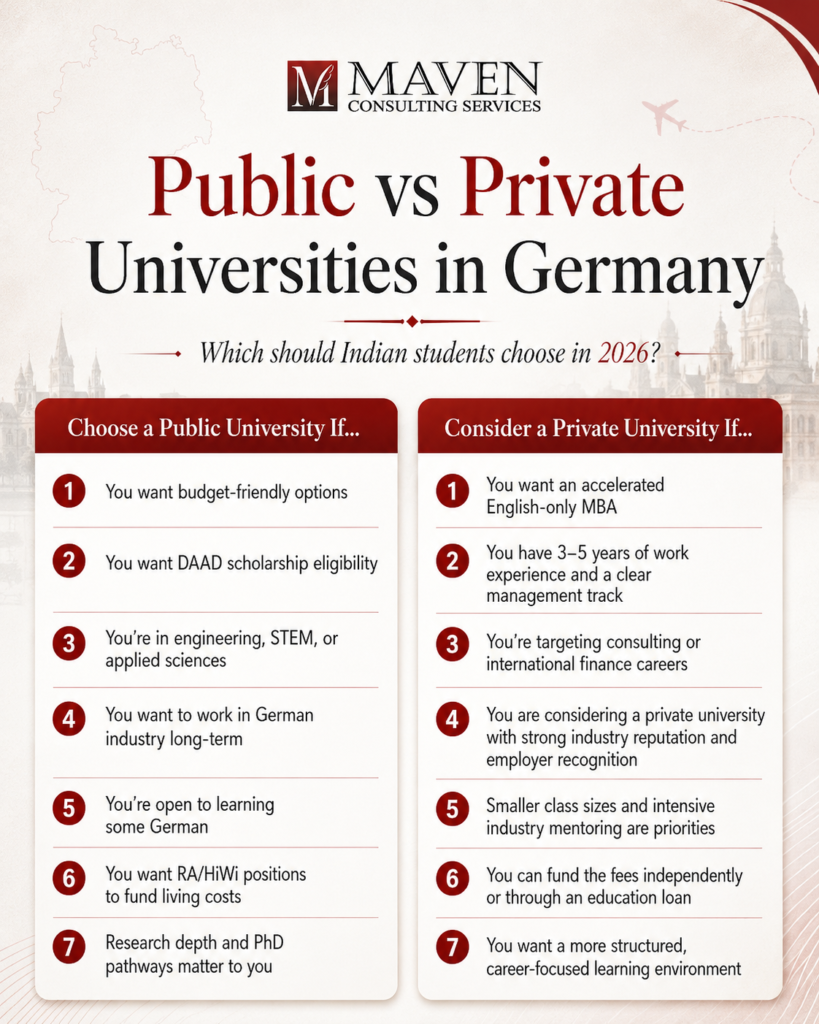
For most Indian students, public universities in Germany offer the strongest value because
—no tuition fees
—DAAD scholarship access
—strong employer recognition
—equivalent post-study work rights
Private universities serve a specific use case: accelerated English-taught MBA programmes, fields where a particular private institution has a standout reputation (such as WHU for management), or students seeking smaller class sizes and intensive industry mentoring. The key factor is not prestige — it is accreditation status and what you intend to do with the degree.
Germany’s higher education system divides into two broad categories: staatliche Hochschulen (state-funded public universities) and private Hochschulen (privately funded universities). Both can award Bachelor’s, Master’s, and PhD degrees. Both can be state-recognised. But the similarities end there.
Public universities in Germany are funded by state governments (Länder). They are research-intensive, large in cohort size, and charge no tuition fees beyond a small Semesterbeitrag. Private universities are funded through tuition fees and industry partnerships. They are smaller, often more internationally oriented, and increasingly English-taught at the postgraduate level.
| CRITICAL DISTINCTION |
|---|
| Not all private universities in Germany are equal. State recognition (staatliche Anerkennung) is the only thing that makes a German degree legally valid for employment, EU Blue Card eligibility, and Indian equivalency purposes. Always verify that a private university carries this status before applying. |
| Fee Component | Public University | Private University |
|---|---|---|
| Tuition Fees (Most States) | €0 / semester | €5,000–€20,000 / semester |
| Tuition — Baden-Württemberg (non-EU) | €1,500 / semester | €5,000–€20,000 / semester |
| Semesterbeitrag (Admin + Transport) | €150–350 / semester | €150–350 / semester |
| Typical 2-Year Master’s Total (Fees Only) | €600–1,400 total | €20,000–€80,000 total |
| Living Costs (All Universities) | €800–1,100/month (roughly equivalent across both types) | |
| MAVEN INSIGHT |
|---|
| The blocked account requirement for Germany is the same regardless of university type — currently around €11,208/year as mandated by German immigration law. This is your living cost assurance, not a university fee. |
| University | Location | Strengths | QS Ranking | English Master’s? |
|---|---|---|---|---|
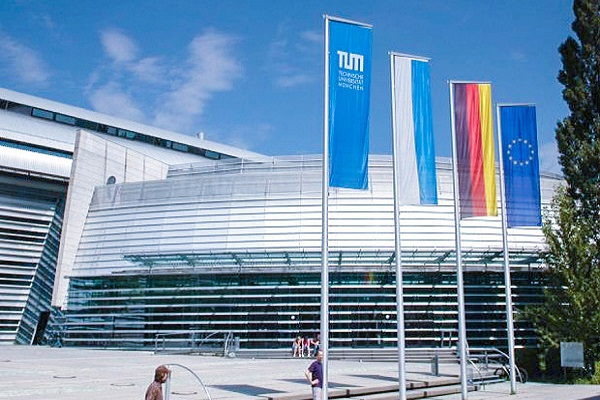
| TU Munich (TUM) | Munich, Bavaria | Engineering, CS, Data Science, Management | Top 50 globally | Yes — extensive |
| LMU Munich | Munich, Bavaria | Life Sciences, Physics, Business | Top 60 globally | Yes — select |
| RWTH Aachen | Aachen, NRW | Mechanical Engineering, Electrical, Production | Top 100 globally | Yes — growing |
| TU Berlin | Berlin | Engineering, CS, Urban Planning, Economics | Top 150 globally | Yes — strong |
| Heidelberg University | Heidelberg, BW | Medicine, Life Sciences, Humanities | Top 65 globally | Yes — selected |
| KIT Karlsruhe | Karlsruhe, BW | Engineering, Physics, Computer Science | Top 120 globally | Yes |
| University of Hamburg | Hamburg | Economics, Law, Informatics | Top 250 globally | Yes |
| Pros | Cons |
|---|---|
| Mostly no tuition fees | Highly competitive admissions |
| Strong global recognition | Strict deadlines |
| Excellent research infrastructure | Less handholding |
| Strong for engineering, sciences, CS, and research | German may be required for many programs |
| Large student communities | Large classes |
| Strong academic reputation | Administrative processes may feel slow |
| Better scholarship ecosystem | Documentation must be very precise |
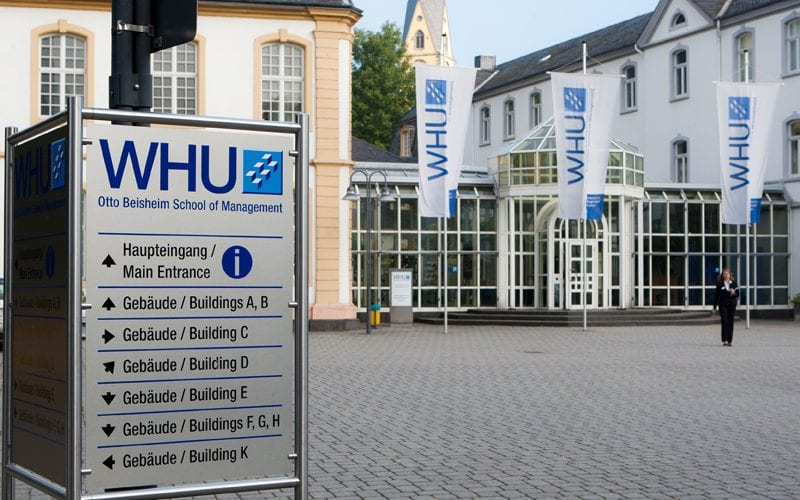
Germany’s private university landscape has grown considerably. The best private institutions are genuinely competitive — but they represent a significant financial commitment. Here are the ones with established reputations relevant to Indian postgraduate applicants.
| University | Known For | Annual Fees | State Recognised? | Best For |
|---|---|---|---|---|
| WHU – Otto Beisheim School | Germany’s top private business school; MiM, MBA, EMBA | €20,000–€36,000/yr | Yes | Management, consulting careers |
| ESMT Berlin | MBA, executive education, management | €25,000–€38,000/yr | Yes | MBA applicants, Berlin focus |
| Constructor University (formerly Jacobs) | Engineering, Data Science, Computer Science | €12,000–€20,000/yr | Yes | International students, English medium |
| IU International University | Business, IT, Health Sciences — online & hybrid | €3,000–€10,000/yr | Yes | Flexible / online-first learners |
| EBS Universität (Wiesbaden) | Business, Law, Real Estate | €14,000–€22,000/yr | Yes | Finance and law-oriented students |
| SRH Berlin | Media, Design, Engineering, Management | €7,000–€14,000/yr | Yes | Creative and applied programmes |
| Choose Private If | Why |
|---|---|
| You missed public university deadlines | Rolling admissions may help |
| You want an English-taught program | Private universities offer many options |
| Your grades are average but your profile is strong | Admissions are more flexible |
| You prefer smaller classes | Better professor interaction |
| You want business, IT, design, or management | Private universities are strong in applied fields |
| Your family can manage tuition | Costs are significantly higher |
| You want structured career support | Private universities often provide more handholding |
| MAVEN INSIGHT |
|---|
| “ At Maven, we regularly field enquiries from students who’ve been approached by agents promoting lesser-known private universities in Germany with promises of easy admission and guaranteed placements. My advice is always the same: verify state recognition first, then ask what percentage of graduates are employed in Germany within 12 months of graduation. A programme that cannot answer the second question clearly is one to approach with caution. We’ve placed students at both public and reputable private institutions, and the outcomes diverge sharply based on choice quality, not just university type. ” |
| Rajshekar Tubachi — Founder, MavenConsulting Services |
This is the foundational requirement. A state-recognised private university can legally award degrees treated equivalently to public university degrees under German law. Without this, a degree has no standing for German employment, EU Blue Card applications, or Indian equivalency verification through the AIU.
Beyond institutional recognition, individual programmes may carry accreditation from bodies like AQAS, FIBAA, or ASIIN (engineering-specific). A non-accredited programme, even from a state-recognised institution, may create complications for professional registration in some countries.
| Recognition Type | Who Issues It | Why It Matters for Indian Students |
|---|---|---|
| State Recognition | German state government (KMK) | Degree legally valid in Germany; EU Blue Card eligible; AIU equivalency possible |
| Programme Accreditation (AQAS/FIBAA) | Independent German accreditation bodies | Programme quality assurance; some employers specifically check for this |
| ASIIN Accreditation | ASIIN (engineering/sciences) | Important for engineering and natural science programmes; internationally recognised |
| AACSB / EQUIS (Business Schools) | International accreditation bodies | Top-tier business school signal; WHU and ESMT carry these |
The admission pathways differ in some important ways. Both types require the APS certificate — a point that surprises many students who assume it is a public-university-only requirement.
| Requirement | Public Universities | Private Universities |
|---|---|---|
| APS Certificate | Mandatory (visa requirement) | Mandatory (visa requirement) |
| Academic Qualifications | Strong undergraduate GPA; subject relevance critical | Varies; some private unis more flexible on GPA |
| German Language | Required for German-taught programmes (TestDaF / DSH B2–C1) | Usually not required for English-taught programmes |
| English Proficiency | IELTS 6.5–7.0 / TOEFL iBT 88–100 for English-taught | IELTS 6.5–7.0 / TOEFL iBT 90–100 typically |
| GMAT / GRE | Rarely required | Often required for MBA/management at top private schools |
| Work Experience | Not typically required for research-track Master’s | Required for MBA (2–5 years); some Master’s too |
| Application Platform | Uni-Assist (centralised) + direct university portals | Direct university portals; no Uni-Assist typically |
| ENGLISH PROFICIENCY FOR GERMANY |
|---|
| Maven is Karnataka’s ETS TOEFL Power House. Most English-taught Master’s programmes at public universities require TOEFL iBT 88–100. Private universities like WHU and ESMT typically ask for 100+. Start TOEFL preparation at least 3–4 months before application deadlines. |
The DAAD (Deutscher Akademischer Austauschdienst) is Germany’s largest scholarship organisation. DAAD scholarships — including the flagship EPOS scholarships and DAAD Research Grants — are primarily tied to accredited programmes at public state universities. While DAAD does not categorically exclude private universities, the vast majority of DAAD-funded places are at public institutions.
This national merit scholarship (€300/month) is available at both public and private state-recognised universities. However, public universities have far more places due to larger student populations and more corporate partnerships.
Erasmus Mundus Joint Master’s programmes are typically administered through public university consortia across Europe. These are full scholarships covering tuition and living costs — Indian students are highly competitive applicants.
| Scholarship | Available at Public? | Available at Private? | Value (Approx) |
|---|---|---|---|
| DAAD EPOS / Postgraduate | Yes — primary focus | Rare / limited | €934/month + benefits |
| Deutschlandstipendium | Yes — extensive | Yes (state-recognised) | €300/month |
| Erasmus Mundus JMD | Yes — majority | Occasional | Full scholarship (€1,400+/month) |
| University-Specific Merit Awards | Yes | Yes (WHU, ESMT, etc.) | Varies widely |
| RA / TA / HiWi Positions | Yes — common | Rare | €400–800/month |
Germany grants graduates of state-recognised universities, public or private, an 18-month job-seeker visa after graduation. This allows you to remain in Germany and look for employment in your field of study. The university type does not affect this entitlement. Recognition status is what matters.
Once employed at a qualifying salary threshold (approximately €45,300/year for most fields; €35,100 for STEM shortage occupations in 2027), graduates can apply for the EU Blue Card regardless of whether they attended a public or private university. The degree must be from a state-recognised institution.
While legally equivalent, employer perception in Germany — particularly among mid-market manufacturing firms, the Mittelstand, and engineering companies, strongly favours public university graduates from the established Technische Universitäten. For international consulting firms, global tech companies, or management roles, WHU and ESMT carry genuine weight.
| ✗ MYTH | ✓ REALITY |
|---|---|
| “Private universities in Germany are better quality because they charge higher fees.” | Germany’s top-ranked universities globally are all public — TU Munich, LMU, Heidelberg, RWTH Aachen. Fees indicate funding model, not quality. |
| “Studying at a public university in Germany is completely free for Indian students.” | No tuition, but students pay €150–350/semester Semesterbeitrag. Baden-Württemberg charges €1,500/semester for non-EU students. |
| “APS certificate is only needed for public universities.” | APS is a German visa requirement, not a university requirement. Every Indian student applying to any German university needs it — public or private. |
| “Private university students get better job placements because of industry connections.” | Top public universities like TU Munich and RWTH Aachen have extensive industry networks. Placements depend heavily on individual effort and field of study. |
| “Public university admission is harder — private is an easier route to Germany.” | Visa requirements (APS, blocked account, TOEFL/IELTS) are identical. Admission to top public programmes is competitive, but many mid-tier public universities are accessible with strong profiles. |
The right answer depends on your goals, budget, and field of study. Here is how we frame this at Maven:
| BEFORE YOU APPLY TO ANY PRIVATE UNIVERSITY IN GERMANY |
|---|
| Always verify: (1) State recognition status via the Hochschulkompass database (2) Programme accreditation (AQAS/FIBAA/ASIIN) (3) Graduate employment rate in Germany within 12 months (4) AIU equivalency track record for students returning to India Maven can help you run this verification checklist before you commit. |
1. Are public universities in Germany really free for Indian students?
Mostly, yes. Many public universities charge no tuition, only a semester contribution. But exceptions exist, such as Baden-Württemberg’s €1,500/semester fee for non-EU students and some university-specific tuition rules.
2. Are private universities in Germany worth it?
Yes, if the university is state-recognized, the program is accredited, and the course matches your career goals. They work well for students who want flexibility, English-taught programs, and smaller classes.
Click here to read: Best Courses in Germany for Indian Students to Study in 2026
3. Do private universities in Germany offer English-taught programs?
Yes. Most private universities offer many English-taught programs, especially in business, IT, data science, design, and management.
4. Is APS mandatory for both public and private universities?
Yes. APS is generally mandatory for Indian students applying to study in Germany, whether the university is public or private.
5. Which option is better for jobs in Germany?
Both can lead to jobs. Public universities have stronger academic and research recognition, while private universities may offer better career support and industry links.
6. Which option is better for jobs in Germany?
Not automatically. Your salary depends more on your field, skills, internships, German language ability, and work experience.
7. Which option is better for jobs in Germany?
Sometimes, but it is not guaranteed. Credit transfers depend on the university, course match, ECTS credits, grades, and seat availability.
8. Which option is better for jobs in Germany?
Yes, if the university is state-recognized and the program is accredited. Always verify this before applying.
9. Is German language required for public universities?
For many bachelor’s programs, yes. For master’s programs, many English-taught options are available. Still, learning German helps with jobs and daily life.
10. Is German language required for public universities?
Public universities are better for low cost, strong academics, and STEM/research. Private universities are better for flexible admissions, English-taught programs, and career-focused learning.
Here’s the honest answer: Germany is a great choice, but only if you choose the right university for your profile.
Which means between Public Universities vs. Private Universities, the best choice really depends on you.
The Maven way to decide is simple:
Profile first. University second. Country third.
A public university is not automatically better. A private university is not automatically easier. The right choice depends on your grades, budget, course, language comfort, deadlines, and career goals.
At Maven Consulting Services, we help Indian students shortlist the right public and private universities in Germany, plan APS timelines, prepare strong SOPs, compare real costs, and build a visa-ready application.