WhatsAppCHAT
CALL US& CONNECT


Ask a room of Indian master’s applicants where they are going and you will hear the same four answers: the USA, the UK, Canada and Australia. Ask where the value is in 2027 and the honest answer is more interesting. Sweden, France, Ireland and the Netherlands offer English-taught master’s degrees, EU-standard qualifications and a real route to a first job, often for less than a year in London or Boston.
This guide compares the underrated study abroad destinations for Indian students that most families never shortlist, using the same five lines for each: first-year cost in rupees, what you can earn while you study, how long you can stay after graduating, the single biggest catch, and who the country actually suits. It is written for 2027 intakes, with every rule checked against the government source.
It matters now because three of these four countries changed their rules between May and August 2026. Sweden capped term-time work. France raised the money you must show and removed housing benefit for most non-EU students. The Netherlands is still deciding how many English-taught places to keep. Much of what is online was written before these changes. If you are still weighing the big four, read our UK vs Ireland comparison for 2027 and our Study in Europe guide alongside this one.
Each of these countries solves a problem the big four have created. The US has made the route to work more expensive and uncertain. Canada and Australia have capped international numbers. The UK shortened its Graduate Route. Families are looking for a degree that still leads somewhere, at a cost that does not need a second mortgage.
Sweden, France, Ireland and the Netherlands each offer something specific. Sweden has world-class technical universities and a work culture that rewards engineers. France has the lowest public-university tuition in this list and a bilateral arrangement that favours Indian graduates. Ireland is English-speaking, inside the EU and home to the European headquarters of many global tech and pharma firms. The Netherlands has the clearest route from degree to job of any country in continental Europe.
None of them is a shortcut. Each has a catch that the brochures leave out, and in 2026 several of those catches got sharper. That is what the rest of this guide is about.
This is the table to show your parents. Costs are for the first year of a two-year master’s, converted at €1 = ₹109 and SEK 1 = ₹9.67 (mid-market rates on 28 September 2026). Living costs use each government’s own minimum, counted over 12 months, so treat them as a floor rather than a comfortable budget. Flights and insurance are not included.
| Sweden | France | Ireland | Netherlands | |
|---|---|---|---|---|
| Tuition, year one | SEK 80,000–145,000 for most programmes (₹7.7–14 lakh) | €3,950 at public universities (₹4.3 lakh); business and engineering schools far higher | Commonly €20,000–30,000 (₹21.8–32.7 lakh) | Commonly €16,000–26,000 (₹17.5–28 lakh) |
| Money you must show | SEK 10,656 a month (2026) | €877.50 a month from 1 Aug 2026 | €10,000 for a one-year course | €1,130.77 a month (2026) |
| Indicative first-year total | ₹24–27 lakh (engineering) | ₹16–20 lakh (public university) | ₹33–48 lakh | ₹32–43 lakh |
| Work during term | 15 hours a week (permits from 11 Jun 2026) | 964 hours a year (about 60 per cent of full time) | 20 hours a week | 16 hours a week, and the employer needs a permit |
| Full-time work allowed | June to August | Within the 964-hour annual limit | June to September, and 15 Dec to 15 Jan | June to August (instead of 16 hours in term) |
| Post-study stay | Up to 12 months to look for work | 12 months standard; Campus France India cites 24 months for Indian master’s graduates | 12 + 12 months (Stamp 1G, Level 9) | 12 months (orientation year), usable within 3 years |
| Biggest catch | 15-hour cap and strict credit targets | French language for jobs; three new costs | Housing shortage | English-taught places may be capped |
Two things stand out. France is by far the cheapest on paper, but only at a public university, and only if you can live on the minimum. Ireland and the Netherlands cost about the same as a UK master’s, but give you a longer and cleaner runway to a job. The cost column is only half of the decision. For the full six-country picture, see our line-by-line cost comparison for 2027.
Maven Note: The “money you must show” figure is a visa rule, not a lifestyle budget. In Stockholm, Paris, Dublin and Amsterdam, rent alone can take most of it. Build your plan on the real rent quoted for your city, then check it clears the government minimum, never the other way round.
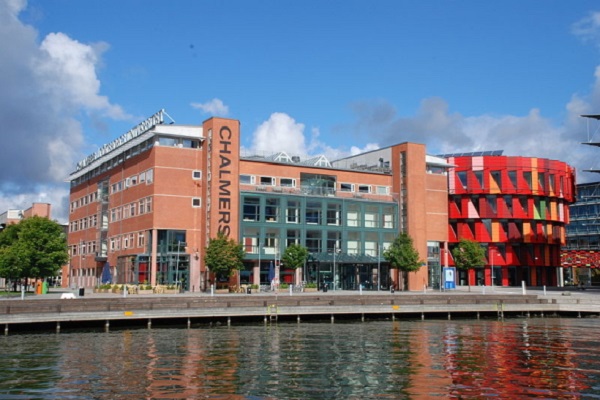
Sweden is the quiet favourite of engineering and sustainability applicants. KTH, Chalmers, Lund and Uppsala run strong English-taught master’s programmes, class sizes are small, and teaching is practical and project-based. Living costs are high by Indian standards but lower than you might expect for Scandinavia.
According to Study in Sweden, the Swedish Institute’s official portal, annual tuition for non-EU students runs from about SEK 80,000 in humanities to SEK 120,000–145,000 in engineering and natural sciences, and up to SEK 295,000 in architecture and design. The application fee through University Admissions is SEK 900 and the residence permit fee is SEK 1,500.
For 2026 applicants, the Swedish Migration Agency requires at least SEK 10,656 a month for living costs. There is one rule that surprises many Indian families: you must pay the first tuition instalment before you apply for the permit, because you are only finally admitted once the fee is paid. Plan the money a month earlier than you would for other countries.
Until June 2026, students in Sweden had no limit on working hours, which was a big part of the appeal. For permits granted on or after 11 June 2026, paid work is capped at 15 hours a week during term. You can work without a limit in June, July and August, and work that is part of your programme, such as internships and some university roles, is exempt.
The same reform added study-progress rules. You must complete at least 37.5 credits in your first year and 45 credits a year after that. Fall short, and your permit can be withdrawn or your extension refused. The message is clear: Sweden wants full-time students, not part-time workers.
A Swedish permit decision is not the finish line. Once approved, most Indian students still need to: book a biometrics appointment for the residence permit card, collect the card before travel, arrange accommodation (student housing queues can be long in Stockholm and Lund), and, on arrival, register with the Swedish Tax Agency for a personal identity number if the permit is for a year or more. Leave at least four to six weeks for this.
Master’s graduates can apply for a permit of up to 12 months to look for work, as long as they apply before their student permit expires (Migration Agency guidance). From 1 June 2026, a standard Swedish work permit needs a salary of at least 90 per cent of the national median. Former students get a lower threshold of 75 per cent of the median for their first two years, which is a real advantage over applicants from abroad (Migration Agency, 1 June 2026).
Who Sweden suits: engineering, sustainability and life-science applicants with savings or a loan that covers living costs without relying on part-time work, and who are comfortable with a strict credit schedule. Our Study in Sweden page covers universities and intakes in more detail.
France is the cheapest destination in this list if you study at a public university. It is also the country where the gap between the brochure and the reality widened most in 2026. Here is what changed, in order of impact.
Non-EU students at French public universities pay “differentiated” fees: €2,902 a year for a bachelor’s and €3,950 a year for a master’s in 2026-27, against €178 and €255 for EU students (Service-Public, updated 20 August 2026). Until now, many universities quietly waived the higher fee for most international students.
That changed with Decree 2026-385 of 19 May 2026. Universities can now exempt at most 30 per cent of their non-EU students in 2026-27, 25 per cent in 2027-28 and 20 per cent in the long term. If you are starting in 2027, assume you will pay the full €3,950 unless your university confirms an exemption in writing.
The picture is very different at grandes écoles and business schools, which set their own fees. English-taught master’s programmes there commonly cost €12,000 to €25,000 a year or more, which puts them in the same bracket as Ireland.
The minimum resources for a French student visa and residence permit rose from €615 a month, a figure unchanged since 2002, to €877.50 a month, or €10,530 for a full year. It is now linked to 47 per cent of the gross minimum wage, so it will rise again whenever the minimum wage does (Préfecture du Bas-Rhin, 1 August 2026).
From 1 July 2026, non-EU students on a student visa or permit can only receive the APL housing benefit if they hold a French higher-education scholarship awarded on social criteria (CAF). Students who are employed or self-employed remain eligible. For most Indian students, that removes a benefit that used to cover a meaningful part of the rent. Rebuild your budget without it.
Students can work up to 964 hours a year, about 60 per cent of full-time. After a master’s, the standard post-study permit to look for work or start a business is 12 months. Campus France India states that Indian students can extend their stay for up to 24 months after completing their studies, and that Indian master’s and PhD graduates of French institutions are eligible for a five-year short-stay Schengen circulation visa. Both are genuine advantages over other nationalities.
Who France suits: students who are willing to learn French to a working level, applicants to strong public-university programmes in science, mathematics and engineering, and business students who have compared business-school fees honestly against Ireland and the UK. Without French, the job market after graduation is much narrower. Our Study in France page covers universities and intakes in more detail.
Maven Note: In France, three numbers moved in the same summer: the fee exemption cap, the €877.50 monthly minimum and the APL. A 2025 budget for France understates the 2027 reality by several lakh rupees. If a counsellor or website quotes you France at “under ₹10 lakh a year”, ask which year the figures are from.
Ireland is the easiest of the four to adapt to. Teaching and daily life are in English, the one-year taught master’s is standard, and Dublin hosts the European headquarters of many major technology, finance and pharmaceutical firms. It is the natural alternative for students who wanted the UK but not the UK’s shorter Graduate Route. Our UK vs Ireland guide compares the two directly.
Non-EU taught master’s fees at the main universities commonly fall between €20,000 and €30,000, with some business and specialist programmes higher. For the visa, you must show €10,000 for a one-year course, in line with the student finance rules in force since 30 June 2025. Registering your Stamp 2 permission costs €300. In Dublin, most students need more than €10,000 a year to live, so plan for €12,000 to €14,000.
Stamp 2 students can work up to 20 hours a week in term and 40 hours a week in the holiday periods, which are fixed as June to September and 15 December to 15 January. That is the most generous term-time allowance in this list.
Under the Third Level Graduate Programme, a Level 9 (master’s) graduate gets 12 months of Stamp 1G permission, renewable for another 12 months if you can show you are taking real steps towards graduate-level work. That is up to two years to find a job, with full-time work allowed. The registration fee is €300.
To stay on after that, most graduates move to a Critical Skills Employment Permit. From 1 March 2026 the standard minimum salary is €40,904, and a new Critical Skills Graduate threshold of €36,848 applies to recent graduates. It is the usual next step for skilled graduates. Check the current list and rules on the Department of Enterprise website.
Ireland has a serious shortage of student accommodation. A Sherry FitzGerald report published in February 2026 put the gap at about 38,900 student beds across Dublin, Cork, Limerick and Galway, with Dublin under the most pressure. In practice, the offer letter is the easy part. Finding a room you can afford, before your course starts, is harder.
Maven Note: For Ireland, book accommodation the week you accept your offer. Pay only through the university’s own residence office or a verified purpose-built student operator, never to a private landlord you have not met or verified. Rental scams targeting incoming international students are common every August.
Who Ireland suits: technology, data, pharma and finance students who want an English-speaking EU country, a one-year course and two years to find work, and who can start the accommodation search early. Our Study in Ireland page covers universities and intakes in more detail.
The Netherlands has the most English-taught programmes in continental Europe and some of the most internationally respected universities, including TU Delft, Eindhoven, Utrecht, Amsterdam and Erasmus Rotterdam. Its graduate route is also the best designed of the four.
Non-EU tuition is set by each university and varies by programme. For 2026-27, TU Delft charges non-EEA master’s students €25,633, and most Erasmus University Rotterdam programmes sit around €21,000, with the business school higher. Across universities, most taught master’s programmes fall between €16,000 and €26,000.
For living costs, the IND requires €1,130.77 a month in 2026. Your university normally applies for the residence permit on your behalf as a recognised sponsor, which makes the visa process more predictable than in many countries.
Non-EU students can work either up to 16 hours a week during term or full-time in June, July and August, but not both. The employer must get a work permit from the UWV for you, according to the Netherlands Labour Authority. That paperwork puts off many small employers, and many part-time jobs expect Dutch. Do not build your budget on part-time income here.
The orientation year (zoekjaar) gives you 12 months to live in the Netherlands and work freely, with no employer permit needed. You can use it at any time within three years of graduating, which means you can go home, work elsewhere, and still come back.
If you are hired as a highly skilled migrant during or soon after the orientation year, a lower salary threshold applies: €3,122 gross a month in 2026 for recent graduates within three years of finishing. That is well below the standard threshold and within reach for a first engineering or data role.
The Dutch government has spent three years debating how much teaching should be in English. The most controversial proposal, a test for every existing English-taught programme, was dropped. In May 2026 the education minister said existing English-taught programmes will be kept, but the revised Internationalisation in Balance bill still includes the power to cap intake into English-taught master’s programmes for non-EU students. The bill has not yet passed. Universities have also set their own voluntary limits. Housing in Amsterdam, Utrecht and Delft is as tight as in Dublin.
Who the Netherlands suits: engineering, data, logistics and business students with a strong academic profile who want a structured route to a first European job, and who can apply early for programmes that may cap numbers. Our Study in the Netherlands page covers universities and intakes in more detail.
The length of the post-study permit matters less than what happens when it ends. A two-year permit with no route to a work visa is worth less than a one-year permit with a reachable salary threshold. This is how the four compare.
| Country | Post-study permission | What you need to stay on | Our read |
|---|---|---|---|
| Sweden | Up to 12 months to seek work | Work permit at 75 per cent of the median salary for former students (90 per cent otherwise) | Good if you land a job; the student threshold helps |
| France | 12 months standard; up to 24 months for Indians per Campus France India | A job offer and the right permit, often a Talent Passport for skilled roles | Strong on paper; French language decides most outcomes |
| Ireland | 12 + 12 months (Level 9) | Critical Skills permit: €40,904, or €36,848 for recent graduates | Longest runway; clear salary target |
| Netherlands | 12 months, usable within 3 years | Highly skilled migrant salary of €3,122 a month for recent graduates | The clearest and most flexible route |
If your main goal is a job in Europe after the degree, the Netherlands and Ireland are the most predictable. Sweden rewards engineers who can land a role within the year. France is the highest reward for the most effort, because the language opens or closes most doors.
Families often plan to cover living costs with part-time work. In 2027, that plan works in one of these four countries, partly works in two, and is risky in the Netherlands.
The safe rule is the same everywhere: the money you show for the visa should cover your full year. Part-time income is for savings and experience, not survival. For the funding side, including loans and the 2 per cent TCS on education remittances, see our guide to funding a 2027 master’s from India.
| If you are… | Look first at | Why |
|---|---|---|
| An engineering or data student on a tight budget | France (public university) or Sweden | Lowest tuition, strong technical programmes |
| A tech or pharma student who wants English everywhere | Ireland | English-speaking, 20-hour work rights, two-year Stamp 1G |
| A high-scoring applicant focused on a European job | Netherlands | Top universities and the orientation year |
| A business student | Ireland or the Netherlands; France only after comparing business-school fees | Clear job routes in English |
| A design or architecture student | Sweden or the Netherlands | Strong programmes, although Swedish design fees are high |
| Willing to learn a new language seriously | France | The 24-month route and the alumni visa reward the effort |
If none of these fit and you are weighing a destination outside Europe, our New Zealand 2027 guide covers a route with a points-based path to residence, and our USA vs Canada comparison covers the North American options.
Scholarships can change the maths considerably, especially in Sweden, France and the Netherlands, where government and university awards cover tuition for strong applicants. Our 2027 scholarship calendar lists the dates.
Founder Perspective
“Every year, I meet families who have never considered Europe beyond Germany. When we lay the numbers side by side, some of them realise that a French public university or a Swedish engineering programme gives them a better degree for less money than a mid-ranked university in the big four. But I also see the other side: students who chose a country because a video called it cheap, and arrived without housing, without the language, and without a plan for the job search. These four countries are underrated, not easy. Choose one because its catch is a catch you can live with, and plan for that catch from the first day.”
Rajshekar Tubachi, Founder, Maven Consulting Services
Of these four, France is the cheapest at a public university: the non-EU master’s fee is €3,950 a year for 2026-27, and students must show €877.50 a month for living costs. A first year typically costs ₹16–20 lakh. Business schools and grandes écoles charge far more.
Yes, but with a limit. Students whose permit is granted on or after 11 June 2026 can work up to 15 hours a week during term and without a limit in June, July and August. Work that is part of the programme, such as internships, is exempt.
For most, no. From 1 July 2026, non-EU students on a student visa or permit can only receive the APL if they hold a French higher-education scholarship awarded on social criteria. Students who are employed or self-employed remain eligible.
From 1 August 2026, the minimum is €877.50 a month, or €10,530 for a full academic year. The figure is linked to 47 per cent of the gross French minimum wage, so it will rise when the minimum wage rises.
A Level 9 (master’s) graduate gets 12 months of Stamp 1G, which can be renewed for another 12 months if you are actively seeking graduate-level work. That gives up to two years, with full-time work allowed.
The orientation year (zoekjaar) is a 12-month residence permit for recent graduates. You can work freely without an employer permit, and you can apply for it at any time within three years of graduating.
Existing English-taught programmes are expected to continue. The government dropped the proposed language test for existing programmes, but the Internationalisation in Balance bill, which has not yet passed, would allow caps on English-taught master’s intake for non-EU students.
Yes. Graduates can apply for a permit of up to 12 months to look for work or start a business, before their student permit expires. Former students then get a lower work-permit salary threshold of 75 per cent of the Swedish median for two years.
It depends on your field and budget. Ireland is English-speaking, allows 20 hours of term-time work and gives master’s graduates up to two years. The Netherlands has more English-taught programmes and a lower graduate salary threshold, but tighter part-time work rules and possible caps on places.
Campus France India states that Indian students can extend their stay for up to 24 months after completing their studies, and that Indian master’s and PhD graduates of recognised French institutions can apply for a five-year short-stay Schengen circulation visa.
Sweden, France, Ireland and the Netherlands are the most underrated study abroad destinations for Indian students in 2027, but each one changed shape this year. France is cheapest, with new costs. Sweden is excellent, with stricter rules. Ireland gives the longest runway, if you can find a room. The Netherlands has the clearest route to a job, with some uncertainty on places. Pick the country whose catch you can plan around, and budget from the government’s own figures.
Share your profile, budget and target intake. We will tell you which of these four countries fits, what the first year will really cost, and which universities to shortlist. Maven Consulting Services has guided more than 10,000 students across 700-plus university partners in 20-plus countries, with a 99.8 per cent visa success rate and a commission-free model, so our advice follows your interests, not a university’s.
WhatsApp | Bengaluru, Karnataka · Instagram · LinkedIn · YouTube
<< Previous Blog | Next Blog >>
Sources:
Exchange rates: €1 = ₹109.14 and SEK 1 = ₹9.67, mid-market, 28 September 2026. Figures current as of 28 September 2026. This article is general information for Indian students and families, not immigration advice.

Sunday, October 26, 2025 | The Taj MG Road, Bangalore | 10 AM – 4 PM